White Water Sledging on the Kaituna River
What is white water sledging on the Kaituna River?
It is river-boarding: you lie on a buoyant foam board, wear fins, a helmet and a wetsuit, and swim the rapids of the Kaituna River near Rotorua feet-first behind a guide, including the 7-metre drop at Tutea Falls. It is a different discipline from rafting — you are in the water, not sitting above it in a boat.
Lying Down, Feet First: What Sledging Actually Means
White water sledging — also called river-boarding or river-boogie-boarding, depending on the operator — puts a single person directly in a rapid, lying chest-down on a short, buoyant foam board with a hard nose and handles at the front. Fins on your feet do the steering and the braking. A helmet, wetsuit and buoyancy vest complete the kit. There is no boat, no shared paddling, and no seat above the waterline. You are swimming the river, not riding it.
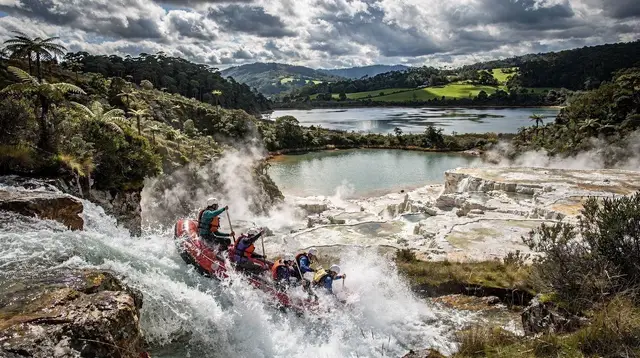
On the Kaituna River near Okere Falls, a short drive northeast of Rotorua, that means working through a continuous run of rapids that culminate in Tūtea Falls, a drop of roughly seven metres commonly cited as the highest waterfall commercially run by rafts and river boards anywhere in the world. On a raft you go over it seated, braced, and gripped inside a boat with four or five other paddlers. On a sledge you go over it prone, low in the water, feet first, with a guide positioning you for the entry and calling the line the whole way down.
This is the distinction worth sitting with before booking anything: sledging and rafting share a river but are not the same activity, and they don’t suit the same person.
Why This Isn’t Rafting, Even Though It Looks Similar on a Brochure
Both trips run the same stretch of the Kaituna River, both include Tūtea Falls, and both are commonly grouped together under “white water” in Rotorua brochures. The similarity mostly ends there.
| White water sledging | White water rafting | |
|---|---|---|
| Position | Lying on a board, in the water | Seated inside an inflatable raft |
| Group dynamic | Solo, guide swims alongside/leads | Shared boat, guide steers from the back |
| Steering | Your own fins and body position | Guide calls strokes, paddlers execute |
| Physical demand | Individual swimming effort, sustained | Shared paddling effort |
| Immersion | Constant, expected, repeated | Occasional splash-through, brief |
| Best suited to | Confident swimmers wanting a close, solo ride | Groups, families, first-timers to white water |
The practical consequence is that sledging is a more intense, more physically individual experience. There’s no boat absorbing the impact of a wave and no fellow paddlers sharing the workload of getting through a rapid — you do that yourself, with fins and body positioning, while a guide reads the water and calls instructions from close by. It rewards people who are already comfortable in moving water and who want to feel the river rather than watch it go past from inside a raft.
Rotorua’s sledging trip on the Kaituna is the standard way to try it; the rafting equivalent on the same river, described further in which river to raft near Rotorua, is the better starting point for anyone unsure which of the two suits them.
Who Sledging Actually Suits
Sledging is not a beginner’s version of rafting, and it isn’t marketed as one by operators who run both. It suits:
- Confident, competent swimmers who are relaxed being submerged repeatedly and briefly held under by moving water — that happens on this river, by design, and the briefing says so plainly.
- People who have already done a rafting trip, on the Kaituna or elsewhere, and want something closer to the water and less structured around a group.
- Travellers comfortable with a solo activity rather than a shared-boat one — there’s no team to lean on mid-rapid, though a guide is present throughout.
- Reasonably fit adults; sustained swimming against and with current for the length of the run is real physical effort, distinct from the burst effort of paddling a raft.
It suits less well:
- Nervous or non-swimmers — operators are explicit that a minimum swimming standard applies, and this is enforced at check-in, not just written in the fine print.
- Most young children — minimum age and weight requirements are set by the operator and tend to sit higher than rafting minimums on the same river, precisely because sledging asks more of an individual body in the water.
- Anyone wanting a shared, social, photograph-heavy group experience — rafting delivers that far better, since a boatload of people goes through the same rapid together and can watch each other do it.
- Anyone with a bad back, shoulder problems, or recent injury — the repeated impact of hitting rapids chest-first is not gentle.
If any of the “suits less well” points describe you, the rafting trip on the same river is the sensible substitute, not a lesser version of the same day. Which river to raft near Rotorua lays out how the Kaituna’s grade compares with gentler options, and travellers wanting a broader read on where sledging sits among the region’s adrenaline activities can check Rotorua’s adventure activities ranked.
What the Day Actually Looks Like
Operators run this as a half-day trip from central Rotorua, with transport to and from Okere Falls typically included. The shape of the day is fairly consistent across providers:
- Check-in and gear fitting. Wetsuit, booties or fins, helmet, and a buoyancy vest go on before anyone sees the river. This is also when swimming ability and any medical concerns are confirmed against the operator’s minimum requirements.
- Safety briefing and flat-water practice. Before the first rapid, groups practise the swimming position, how to hold the board, how to breathe through a wave, and what the self-rescue position looks like if someone comes off their board. This isn’t optional and isn’t rushed.
- The run itself. A guide leads or swims close beside the group through a sequence of grade 3 to grade 5 rapids, calling positioning and timing before each one, with Tūtea Falls as the final and largest drop.
- Tūtea Falls. Guides line swimmers up individually for the entry, since going over incorrectly matters more here than on a smaller rapid.
This is the moment most people book the trip for, and also the one the briefing spends the most time on. 5. Debrief and gear return. A short calmer stretch of river follows the falls before the group exits, changes, and heads back to town.
Total time in the water is usually under an hour, though the whole outing including transport, briefing and changing runs closer to three to four hours. Photos are typically taken by the operator’s own crew positioned at the falls, since carrying a camera while swimming a rapid isn’t practical.
Grade 5, and What That Means Here
River grading runs from Grade 1 (flat, moving water) to Grade 6 (generally considered unrunnable commercially). The Kaituna’s commercial section is usually graded around Grade 5, which reflects continuous rapids with limited flat recovery water between them and the height of the Tūtea drop itself. That grading applies whether you’re in a raft or on a sledge, but the experience of a Grade 5 rapid differs sharply between the two: a raft’s volume and the shared paddling effort of several people cushion and power through a rapid in a way an individual swimmer on a board cannot replicate. This is the core reason operators set separate — and generally stricter — swimming and fitness requirements for sledging than for rafting on the same water.
For travellers who want a taste of moving water without the Grade 5 commitment, the Grade 3 white water rafting trip on the Tongariro River, roughly an hour south near Taupō, is a genuinely gentler alternative and a common way to build confidence before a Kaituna trip on a later visit.
The Tongariro River’s Grade 3 rafting trip runs from Taupō rather than Rotorua and is a straightforward day trip if you’re basing yourself in Rotorua for a few nights — see Rotorua’s day trips for how to fit it around other plans.
Weather, Water Levels and When to Go
The Kaituna is dam-controlled downstream of Lake Rotoiti, which keeps flow relatively consistent compared with a river fed purely by rainfall, but operators still adjust or occasionally cancel trips around exceptionally high flow, heavy rain events, or scheduled water releases. Because the entire activity happens in a wetsuit and you’re already wet regardless of air temperature, this runs comfortably across the seasons — sledging in winter is genuinely done, though the water and air are both colder and sessions can feel shorter as a result. Rotorua’s weather month by month and the broader best time to visit Rotorua guide cover the general seasonal pattern; for this specific activity, the wetsuit does most of the work regardless of month, so it is realistically a year-round booking rather than a summer-only one.
Practical Points Before Booking
- Book ahead in peak season. Groups are kept small for safety reasons, and popular time slots fill, particularly in the summer months.
- Confirm swimming ability honestly. This isn’t a formality — a guide who judges a swimmer unable to manage the rapids safely can, and does, hold someone back from the water.
- Contact lenses and glasses are a genuine consideration given the amount of submersion; some people opt for a strap or skip contacts that day.
- Underneath the wetsuit, swimwear is standard; the operator supplies everything else including the board, fins, helmet and vest.
- Arrive a little early. Fitting wetsuits and completing the safety briefing properly takes real time, and rushing this stage is exactly what operators try to avoid.
- If travelling with a mixed group where not everyone wants to swim a Grade 5 rapid, rafting the same river is the natural compromise — see which river to raft near Rotorua — since it keeps the group on the same water without requiring the same individual swimming commitment.
Nearby Alternatives on the Same River
Okere Falls is a small, concentrated adventure hub, and sledging is only one of several ways operators use the same stretch of the Kaituna. A zipline over the falls runs above the same gorge for anyone who’d rather watch the rapids than swim them, and combined packages exist that pair a shorter zipline session with a rafting run.
The zipline over Okere Falls gives a view of the same water sledgers and rafters are running, from well above it, and works as a lower-intensity add-on for people in a group who aren’t doing the water activity themselves. There’s also a combined option pairing ziplining with a rafting run and a sauna finish.
A combined ziplines and rafting package with a sauna included is worth a look for groups wanting to split time between watching and doing, or for anyone who wants to warm back up quickly after a cold-season river trip.
For a broader sense of how this activity sits alongside Rotorua’s other adrenaline options — from mountain biking in the Redwoods to ziplines elsewhere in the region, covered in Rotorua’s ziplines compared — it helps to think of sledging as the most physically demanding, most solo, and most water-focused of the region’s headline adventure activities, sitting a clear step above rafting and zipline experiences in what it asks of an individual body.
Fitting Sledging Into a Wider Rotorua Trip
Because it’s a half-day commitment with meaningful physical demands, sledging works best scheduled early in a stay rather than at the end of a long day of other activities, and not immediately before a flight given the adrenaline and cold-water exposure involved. It slots naturally into a multi-day adventure-focused itinerary — Rotorua’s 3-day adventure itinerary is built around exactly this kind of activity mix — and pairs reasonably with a calmer day either side, since it is more physically taxing than most of the region’s geothermal or cultural experiences.
Families travelling with children too young for sledging’s minimum age still have straightforward options nearby: the standard Kaituna rafting trip generally allows a younger minimum age, and Rotorua with kids covers age-appropriate adventure activities across the wider region in more detail. Anyone unsure whether their fitness or swimming ability matches sledging’s demands is better served booking the rafting trip on the same river and treating a future visit as the time to try the sledge.
Rafting the Kaituna River remains the more accessible way to experience the same rapids and the same Tūtea Falls drop, for anyone who reads through the requirements above and recognises it fits them better than lying face-first on a board through Grade 5 water.
White Water Sledging on the Kaituna: Common Questions
Is white water sledging the same as rafting?
No. Rafting puts a group in an inflatable boat that a guide steers from behind; sledging puts each person alone in the water on a foam board, using fins to swim and steer through the same rapids. The Kaituna offers both, on the same stretch of river.
Do you go over Tutea Falls on a sledging trip?
Yes, that is the signature feature of the Kaituna trip. Tutea Falls is roughly 7 metres high and is commonly described as the highest commercially run waterfall drop in the world. Guides brief the entry and exit closely and position swimmers for it.
Do I need to know how to swim?
Yes, competent swimming is required, since you are in the water rather than inside a boat. Operators state minimum swimming ability and fitness requirements at booking, and a pre-trip safety briefing and in-water practice on flat water always come first.
What is the minimum age for river sledging on the Kaituna?
Operators set their own minimum age and weight requirements, and these can differ between the Kaituna sledging trip and the Kaituna rafting trip on the same river. Check the specific operator’s requirements before booking rather than assuming one age fits every trip.
Is sledging more difficult than rafting?
It asks more of an individual swimmer, since there is no boat holding you above the water and no other paddlers sharing the effort. Rafting suits groups who want a shared, more social ride; sledging suits people wanting a solo, close-to-the-water experience and are comfortable being submerged repeatedly.
What should I bring, and is gear provided?
Operators provide the board, fins, helmet, wetsuit and buoyancy vest. Bring swimwear to wear underneath, a towel, dry clothes for afterwards, and secure footwear is generally not needed since fins replace shoes on the water.
What grade is the Kaituna River?
The commercially run section is generally graded around Grade 5, reflecting the continuous rapids and the Tutea Falls drop. Guides adjust the exact line and pacing to the group and the river’s flow on the day.
Can I do both sledging and rafting on the same visit to Rotorua?
Yes, since both run on the Kaituna River near Okere Falls, and some visitors do one in the morning and the other later in the trip. They are priced and booked as separate trips rather than a single combined product.
Whitewater rafting tours on the Kaituna River on GetYourGuide
Verified deep-linked GetYourGuide tours. Book through these links and we earn a small commission at no cost to you.
Photos show the destination, not the operator's own images.