3-Day Rotorua Adventure Itinerary: Rafting, Biking and Taupō Bungy
Three Days, Three Adrenaline Hits, and the Recovery in Between
This is not a relaxed loop around the geothermal parks. It is three specific, high-intensity activities — grade 5 whitewater rafting, downhill mountain biking, and bungy jumping — stacked into three days, with the recovery windows built in on purpose rather than left to chance. Skip the recovery and day 2 gets a lot harder than it needs to be.
The route works because everything sits within about an hour of central Rotorua: Okere Falls is roughly 20 minutes north-east, the Redwoods sit on the edge of town, and Taupō is about an hour south by road. A car is close to essential for this itinerary — see the guide to driving in New Zealand if this is a first visit.
| Day | Main activity | Where | Intensity |
|---|---|---|---|
| 1 | Grade 5 whitewater rafting | Okere Falls, Kaituna River | High — short, sharp |
| 2 | Downhill mountain biking + zipline or luge | The Redwoods, then central Rotorua | High, spread over the day |
| 3 | Bungy jump | Taupō | Short and intense, then a slow drive back |
Budget for this pace sits at the mid-range end: figure roughly 350 NZD per person per day once activity fees, a rental car, food and a comfortable bed are added up — see costs and tipping in New Zealand for how that breaks down. Prices here are quoted in NZD, with GST already included in anything an operator advertises.
Day 1 — Grade 5 Rafting at Okere Falls
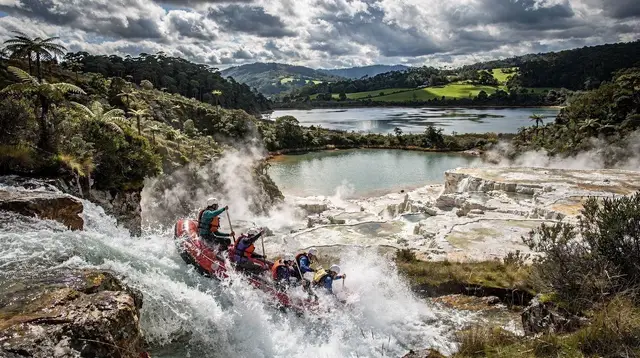
Start early. Most rafting operators run morning departures from central Rotorua, with a shuttle out to the put-in on the Kaituna River near Okere Falls. The Kaituna run includes Tutea Falls, a seven-metre drop that is the highest commercially rafted waterfall in the world, and the river carries a grade 5 rating for that stretch. It is a short trip by rafting standards — closer to an hour on the water than a full day — but it is a genuinely different experience from the grade 2 floats offered on gentler rivers. Full details, including what a grade 5 trip actually involves, are in the Kaituna River rafting guide; if the Kaituna feels like too much on this trip, the guide to which river to raft near Rotorua lays out the calmer alternatives.
Operators supply wetsuits, helmets and buoyancy aids, and every trip opens with a full safety briefing before anyone gets near the water — this is not something to attempt independently. Anyone who wants a gentler version of the same river without the raft can look at white-water sledging, which runs the lower Kaituna on a body board instead.
The recovery block matters here. Cold water and an adrenaline spike leave most people noticeably tired by early afternoon, even without any physical injury. Build in:
- A hot shower and dry clothes straight off the water — most operators have changing facilities on site.
- A slow lunch rather than a rushed one.
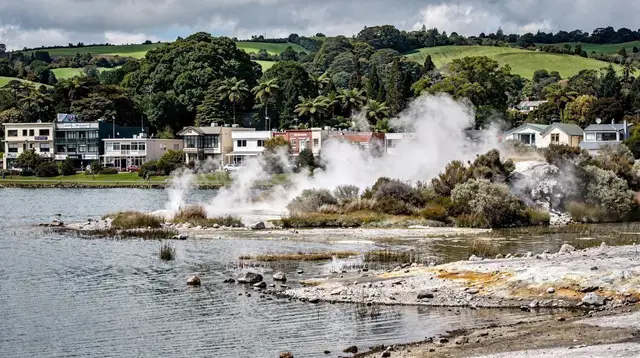
- An afternoon soak. Rotorua sits on active geothermal ground, and a natural hot pool does more for post-rafting muscles than a hotel bed. The free hot springs guide and the broader hot pools guide cover the options, from no-cost riverside pools to a paid spa complex.
- An early night. Day 2 starts with pedalling, and legs that never recovered from a cold river make for a rough climb back up a forest trail.
For travellers who would rather build a whole day around the geothermal side of Rotorua instead of adventure sport, the Wai-O-Tapu half-day tour is a lower-key alternative — worth knowing about even on an adrenaline-focused trip, since not every day of a longer stay has to run at this pace. Half Day Tour Ex Rotorua Wai-O-Tapu Thermal Wonderland is one option if a rest day gets added to this itinerary.
Day 2 — Downhill Mountain Biking in the Redwoods, Then a Zipline or Luge
The Redwoods — Whakarewarewa Forest carries one of the more highly regarded mountain bike trail networks anywhere, built through a forest of Californian redwoods planted in 1901. Trails here range from flowing beginner loops to genuinely technical downhill runs, and a bike hire outpost at the forest entrance rents everything from hardtails to full-suspension downhill rigs. The mountain biking in the Redwoods guide breaks down which trails suit which level, and it is worth reading before picking a bike — a downhill-specific trail on a hardtail is a rough way to spend a morning.
Plan on:
- Morning: two to three hours on the trails, working up through difficulty rather than starting on the hardest run in the network. Downhill trails here are graded like ski runs, and the grading is not for show.
- Midday: lunch back at the forest entrance, and a genuine break — not a five-minute stop. Hands and forearms take a beating on technical downhill trails, and pushing straight into an afternoon activity without a rest tends to show up as fatigue-driven mistakes rather than enjoyment.
- Afternoon: a change of activity rather than more biking. Central Rotorua has both a gondola and luge track and a forest canopy zipline course a short drive from the Redwoods — either one works as a lower-impact adrenaline activity that does not ask the same muscles to work twice. Compare the two in the Rotorua ziplines guide and the Skyline luge guide. Anyone who wants the after-dark version of the forest instead of a second physical activity can look at the Redwoods Treewalk, a canopy walkway that runs as a gentler evening option.
Recovery: this is the day that catches people out, because biking and a zipline or luge both feel manageable in isolation but add up over eight hours outdoors. Finish the zipline or luge by mid-afternoon, not at closing time, and leave the evening free. A short flat walk — the free walking tracks around Rotorua list several — loosens up legs better than sitting still, and an early dinner beats a late one before the day 3 drive. Travellers who would rather trade the second adventure activity for something at a slower pace can look at the Rotorua Eco Thermal Afternoon Tour, which covers geothermal ground on foot without the impact of a second high-adrenaline booking.
Day 3 — The Drive to Taupō and a Bungy Jump
There is no commercial bungy operation in Rotorua itself — the nearest jump is in Taupō, about an hour’s drive south, and that drive is the spine of day 3. Leave mid-morning rather than at dawn; the point of this day is one concentrated adrenaline hit, not another full day of activity stacked on top of two already-tiring ones.
Taupō’s bungy site sits on a cliff above the Waikato River, and the Taupō bungy and skydiving guide covers what to expect, including the option to add a water touch to the jump. Booking ahead is worth doing, since slots fill up on short-notice trips like this one.
With the adrenaline spent, the rest of day 3 is deliberately quiet. Taupō sits on the shore of New Zealand’s largest lake, and a short, low-effort activity on the water works well as a wind-down rather than a wind-up:
- a kayaking trip out to the Māori rock carvings at Mine Bay paddles at an easy pace and turns the afternoon into recovery rather than more exertion.
- a lake cruise to the same carvings covers the same sight without any physical effort at all, which suits a body that has just done three days of hard activity.
- The Huka Falls and Taupō jet boat guide covers a faster-paced alternative for anyone who still has energy left after the jump.
Drive back to Rotorua in the afternoon or evening, or stay overnight in Taupō if the return trip feels like one drive too many after three demanding days.
Fitness, Gear and What to Actually Pack
None of the three headline activities on this itinerary demands athletic conditioning, but the combination — cold water, technical trail riding, and a jump off a cliff — asks more of a body across three days than any one of them would alone. A few practical notes:
| Item | Why it matters |
|---|---|
| Quick-dry clothing, spare set | Rafting soaks everything; a dry change afterwards prevents the whole day feeling colder than it is |
| Closed-toe shoes | Needed for biking, useful for rafting depending on the operator |
| Layers | Weather changes fast in this region regardless of season |
| Sunscreen | UV runs high even under cloud cover, especially in summer |
| A padlock or dry bag | For valuables left at the rafting or biking base while on the water or trail |
For a broader sense of how this itinerary compares to a gentler pace through the same region, the ranked list of Rotorua adventure activities is a useful cross-check, and the best time to visit Rotorua guide covers how season affects river flow and trail conditions. Anyone building this into a longer trip should also read where to stay in Rotorua and the Rotorua to Taupō day trip guide for logistics beyond these three days, and the geothermal safety guide is worth a look before wandering off marked paths anywhere in the region — this is active volcanic ground, and that applies well beyond the three activities above.
FAQ: Planning a High-Adrenaline Rotorua Weekend
Is this itinerary suitable for beginners?
No single activity requires prior experience — guides brief everyone and gear is provided — but the pace assumes a reasonable fitness level and comfort with cold water, heights and speed on the same trip. A nervous first-timer would get more out of spacing these three activities across a longer stay.
How fit do I need to be for three days like this?
Fit enough to sit through a bumpy grade 5 rapid, pedal a downhill mountain bike trail with some climbing between runs, and stand in a bungy queue with adrenaline running. None of it is endurance sport, but back-to-back days without rest add up — that is why each day above ends early.
Do I need my own car for this itinerary?
A car is close to essential. Okere Falls and the Redwoods sit outside easy walking distance from central Rotorua, and Taupō is roughly an hour’s drive south — public transport does not connect these three stops on a tight schedule.
What should I pack for a weekend like this?
Quick-dry clothes and a spare set for after rafting, closed shoes for biking, and layers — Rotorua’s weather turns without much warning any time of year. Sunscreen matters even on a grey day; the UV index here runs high in summer regardless of activity.
Is the Kaituna River rafting trip actually grade 5?
Yes. The Kaituna includes Tutea Falls, a seven-metre drop that is the highest commercially rafted waterfall in the world, and the river is graded 5 for that section. Operators run it as a standard commercial trip with full safety gear, but it is a genuinely different experience from a grade 2 float.
Can I do a bungy jump in Rotorua itself?
No — there is no commercial bungy operation in Rotorua. The nearest is in Taupō, about an hour’s drive south, which is why day 3 of this itinerary is built around the drive down rather than staying in town.
What happens if it rains?
Rafting and biking both run in the rain — a wet grade 5 rapid is still a wet grade 5 rapid, and Redwoods trails drain reasonably well — so a damp forecast is not a reason to reschedule. Only lightning or genuinely dangerous river flow triggers a cancellation, and operators will call it, not you.
Where should I stay for an itinerary based around Okere Falls, the Redwoods and Rotorua town?
Central Rotorua works best as a base for this route — it sits between Okere Falls and the Redwoods and keeps the Taupō drive on day 3 to about an hour. See the accommodation guide linked above for area-by-area detail.
tours.3 days
Verified deep-linked GetYourGuide tours. Book through these links and we earn a small commission at no cost to you.
Photos show the destination, not the operator's own images.