Stories from Rotorua
Long-form writing on the central North Island — the 1886 eruption and the terraces it buried, the language of the place, and what it means to travel somewhere the ground is still moving.
More stories

The Hobbiton Set That Refused to Be Demolished

How Safe Is Geothermal Tourism, Really?

How to Pronounce New Zealand Place Names

Is New Zealand Expensive? What I Actually Spent

Why Only 5% of Wild Kiwi Chicks Survive in Rotorua

The Lord of the Rings Effect, Twenty Years Later

Mountain Biking Capital: How Rotorua Did It

New Zealand Biosecurity: What Not to Bring in Your Bags

What I Actually See When I Walk Into a New Zealand Forest

New Zealand's Upside-Down Year: Christmas in Summer, Explained

What Overtourism Looks Like in Rotorua

The Pink and White Terraces: What Happened in 1886

The Bath House That Built Rotorua's Economy on a Smell

Rotorua by Campervan: Freedom Camping, Holiday Parks and Dump Stations

The Night Tarawera Erupted

The Māori Words I Hear Every Day in Rotorua

What the Tiaki Promise Actually Asks of You

New Zealand's Trout: Legal to Catch, Illegal to Sell

Whakaari After 2019: The Volcano Tours Don't Land On Anymore

What to Pack for Rotorua

Why Rotorua Is Geothermal
Good to know about Rotorua and the central North Island
A few softer questions come up repeatedly before a Rotorua trip, separate from the day-by-day logistics. Is Rotorua expensive? It sits in the middle of New Zealand's pricing range — the 15% goods and services tax is already included in prices shown, and tipping isn't expected, which keeps costs a little more predictable than in some countries. What's the weather actually like?
Reversed from the northern hemisphere, since New Zealand sits south of the equator — summer runs December to February with highs around 23-24°C, winter runs June to August with highs around 12-13°C and morning frosts — but rain falls on roughly 140 days a year regardless of season, and it's worth packing for that rather than assuming a dry stretch. Māori culture here is genuinely lived rather than staged for visitors: Te Arawa iwi still hold the geothermal valleys around Rotorua, Whakarewarewa is a village people call home rather than a re-creation, and a hāngī, food cooked over geothermal steam or in an earth oven, is as much a piece of that living culture as a meal.
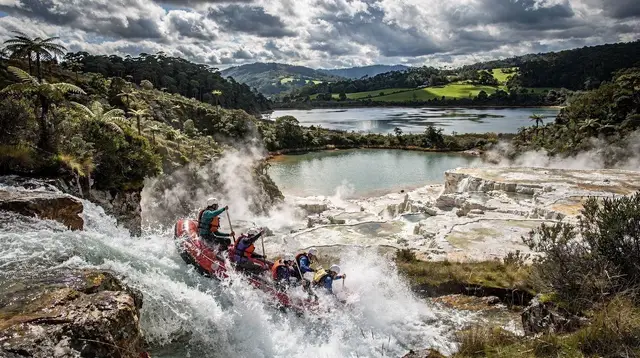
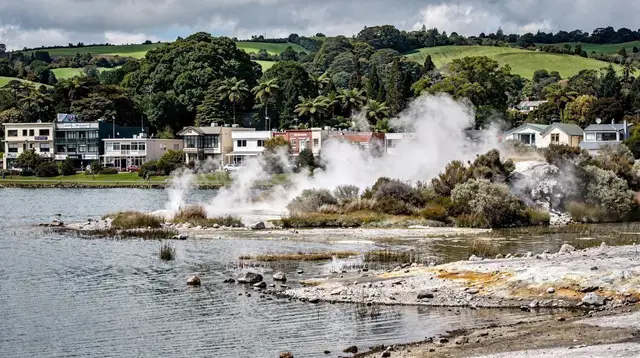
Rotorua's identity is inseparable from its geology: the city sits inside an active caldera in the Taupō Volcanic Zone, and the steam rising from public parks and private gardens is fed by the same geothermal system as the Pōhutu geyser, the Champagne Pool and Waimangu Volcanic Valley, which formed in a single eruption on 10 June 1886 that also destroyed the Pink and White Terraces and killed more than a hundred people.
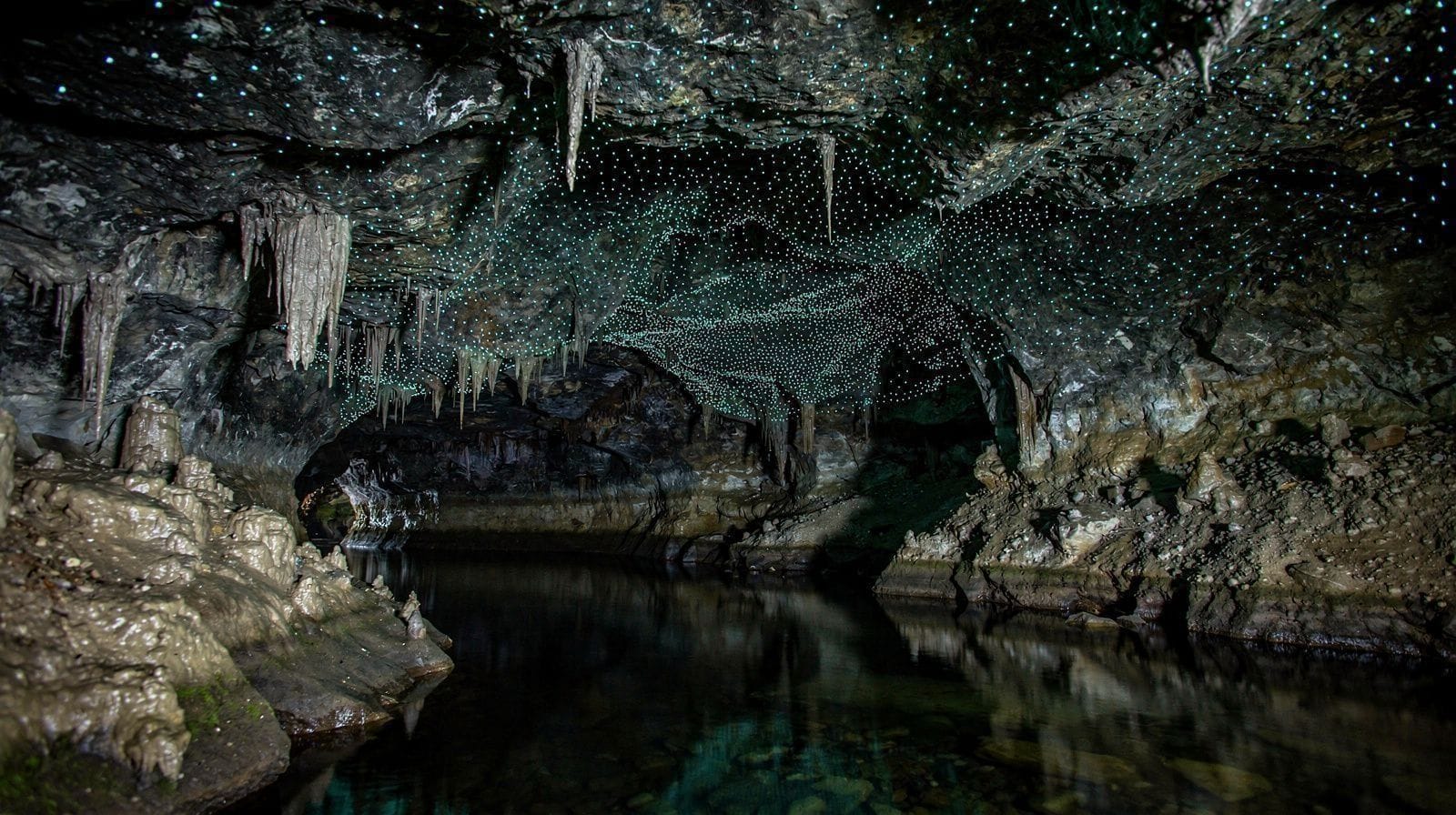
And then there's the question of what belongs in Rotorua and what doesn't: Hobbiton and the Waitomo Caves, though close by and often visited from here, sit in the neighbouring Waikato region rather than in Rotorua itself, and White Island landings stopped after the fatal 2019 eruption — a boat trip or scenic flight is now as close as visitors get. None of these questions has a single answer, which is part of why it's worth thinking through in advance rather than assuming Rotorua works the same way in every season.
Frequently asked questions about Rotorua and the central North Island
Is Rotorua expensive to visit?
It sits in the middle of New Zealand's pricing range — the 15% goods and services tax is already included in prices, and tipping isn't expected, which keeps costs fairly predictable.
What's the weather really like in Rotorua?
Reversed from the northern hemisphere — summer (December to February) sits around 23-24°C, winter (June to August) around 12-13°C with morning frosts — and rain falls on roughly 140 days a year regardless of season.
Is Rotorua's Māori culture put on for tourists?
No — Te Arawa iwi live in and around the geothermal valleys here, Whakarewarewa is an inhabited village rather than a re-creation, and practices like cooking with geothermal steam continue as everyday life, not performance.
Why does Rotorua smell like sulphur?
The city sits on an active caldera within the Taupō Volcanic Zone, and hydrogen sulphide rises with the steam from the same geothermal system that feeds the Pōhutu geyser and the region's hot springs.
Are Hobbiton and Waitomo part of Rotorua?
No — both are in the neighbouring Waikato region, Hobbiton near Matamata about 50 minutes away and the Waitomo Caves about two hours away, even though both are commonly visited from a Rotorua base.
Sightseeing day tours on GetYourGuide
Verified deep-linked GetYourGuide tours. Book through these links and we earn a small commission at no cost to you.
Photos show the destination, not the operator's own images.