Rotorua by Campervan: Freedom Camping, Holiday Parks and Dump Stations
Why Rotorua Is Actually Easy in a Van
I did three weeks around the North Island in a self-contained van, and Rotorua ended up being the base I kept coming back to rather than a place I passed through. It makes sense once you’re in a vehicle: everything in this guide — the geothermal parks, the lakes, Hobbiton an hour away, Waitomo two hours away — sits within a short drive of the town, and the town itself has enough holiday parks and dump stations that you’re never far from a legal place to stop. What it does not have is a free-for-all. Rotorua gets a lot of van traffic, and the council has tightened the rules rather than loosened them, so the two things worth sorting out before you arrive are self-containment and where the freedom camping bylaw actually allows you to stay.
Self-Contained: The Certificate That Decides Where You Can Sleep
Everything starts with one document: the self-containment certificate. New Zealand’s freedom camping system is built around it — a van fitted with a sealed toilet, a fresh water tank, a grey water tank of matching capacity, and rubbish storage can be certified, tested every four years, and given a warrant sticker to display on the windscreen. Without that sticker, a vehicle is legally “non-self-contained,” full stop, whatever the rental company’s marketing photos suggest. I rented a van that was advertised as camper-ready and had to specifically ask for the certification paperwork — it existed, but it wasn’t offered upfront.
This matters in Rotorua more than almost anywhere else I went, because the district has had well-publicised problems with vans dumping waste near lakes and reserves, and the response has been stricter bylaws and more compliance officers checking vehicles at night. A certificate doesn’t guarantee you a park in every spot — some areas are excluded from freedom camping entirely regardless of self-containment — but without one, a holiday park or paid campground is the only legal option, every night, no exceptions.
Where I Actually Parked for Free
I’ll say this plainly: I did not find much genuinely legal freedom camping close to central Rotorua, and I stopped trying to be clever about it. Several of the lake margins that look ideal on a map — quiet, flat, right on the water — are specifically excluded under the current bylaw to protect water quality and the reserves around them, Lake Rotoiti and Lake Tarawera among them. The council publishes an up-to-date map of where certified self-contained vans can stay and for how long, and that map — not an app, not last year’s blog post, not a rental company’s suggestion — is what I’d check before picking a spot, because the list of approved sites changes as the rules get revised.
Where I did find something workable was a little further out of town, along some of the routes toward Taupō and Tauranga, where a handful of council-approved sites exist for self-contained vehicles for a limited number of nights. None of it was glamorous, and none of it was guaranteed — I treated every night as “check the current map, then decide,” rather than assuming a spot that worked for someone else’s trip report would still be open for mine.
Holiday Parks With a Thermal Pool Included
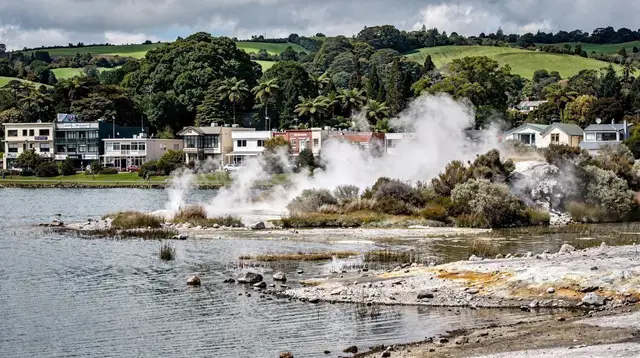
The nights I didn’t freedom camp, I stayed at holiday parks, and Rotorua is genuinely one of the better places in the country to do that, because the same geothermal system that makes the whole region smell faintly of sulphur also means several parks have their own hot pool fed straight from a bore. It’s not universal — plenty of parks here are ordinary campgrounds with powered sites and a shared kitchen, nothing more — so I’d confirm a thermal pool is actually included before booking rather than assuming, since some parks charge extra or restrict pool hours to guests only. It’s one of the few places in the country where a mid-range powered site can come with a genuine geothermal soak thrown in, and after a day walking around Wai-O-Tapu or Hell’s Gate, that mattered more to me than the view.
Budget-wise, a powered holiday park site in the region runs in similar territory to the routes covered in the Rotorua on a budget guide — noticeably cheaper than a motel room, and the trade-off is a shared bathroom block rather than privacy. If a soak matters more than saving the last few dollars, it’s worth comparing that against the free hot springs around Rotorua and the wider hot pools guide before deciding whether you actually need a park with a pool at all.
Dump Stations and Grey Water: The Bit Nobody Explains Well
This is the part that actually determines whether your certificate stays worth anything: what you do with the waste. A dump station is a fixed point — usually a drain set into a concrete pad with a hose for fresh water — built specifically for emptying a toilet cassette and grey water tank. Every holiday park I stayed at had one for guests, and there are a small number of public dump stations around the district for anyone passing through, self-contained or not. What is not acceptable, and what compliance officers do actively look for, is tipping grey water onto grass, into a stormwater drain, or down a public toilet. It sounds obvious written down, but I met more than one traveller who genuinely didn’t know the difference between a dump station and a regular drain until someone explained it.
Practically, I emptied both tanks every two to three days rather than waiting until they were full, because a nearly-full grey water tank in a moving van is unpleasant and a genuinely full one can trigger exactly the kind of overflow that gets reported. It takes five minutes at a proper station and costs nothing at most holiday parks even if you’re not staying the night.
Fitting Tours and Day Trips Around a Van
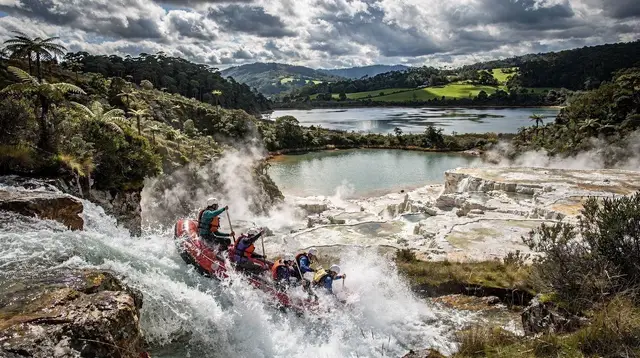
Travelling by van doesn’t rule out booked activities — if anything, it’s easier, because you’re not coordinating pickup times with a hotel lobby. I parked up and joined an afternoon walk through Rotorua’s geothermal terrain with a guide on one of the days I didn’t feel like driving myself around, and did the same later for a half-day out to Wai-O-Tapu and the Waimangu volcanic valley by boat. Both left from central pickup points I could walk to from the holiday park I was staying at that week. On a quieter afternoon I also went out to the buried village of Te Wairoa, which pairs naturally with the region’s Tarawera eruption history and needs no van manoeuvring at all once you’ve parked.
For actual driving, sticking to the left, understanding give-way rules at intersections, and knowing what biosecurity checks apply to camping gear coming into the country are all covered in the driving in New Zealand for visitors guide — worth reading before you collect the van, not after your first roundabout. And if you’d rather leave the van parked for a day and use local transport or a shuttle instead, that’s covered in getting around Rotorua without a car.
FAQ: Campervan Travel Around Rotorua
Do I need a self-contained certificate to camp for free near Rotorua?
Yes. Without a current self-containment certificate and warrant sticker, a van cannot legally freedom camp anywhere in the district, whatever a rental company’s brochure implies.
Where can I actually freedom camp around Rotorua?
Very few places, and the list changes. Rotorua Lakes Council publishes the current freedom camping bylaw and map, and that map is the only thing worth trusting — not a forum post or an app cache from a previous trip.
Are the lakes around Rotorua open to freedom camping?
Mostly no. Several lake margins are explicitly excluded from freedom camping to protect water quality and the surrounding reserves, and rangers do check overnight.
Do holiday parks near Rotorua really have thermal pools?
Several do, because the district sits on the Taupō Volcanic Zone and some parks tap their own bore. It is worth confirming before booking, since not every park has one and not every pool is included in the base site fee.
Where do I empty a campervan’s toilet cassette or grey water tank?
At a dedicated dump station, never into a stormwater drain, a public toilet, or the ground. Holiday parks have one for guests, and the district has a small number of public dump stations for anyone passing through.
Can I stay overnight in a campervan in a Rotorua car park?
Almost never legally. Overnight parking in ordinary car parks is not the same as a freedom camping site, and it is one of the more commonly enforced rules in town.
What happens if I camp somewhere I’m not allowed to?
Rotorua Lakes Council issues infringement notices for freedom camping breaches, and enforcement has increased as visitor numbers have grown. It is treated as a real fine, not a warning.
Tours near where you stay on GetYourGuide
Verified deep-linked GetYourGuide tours. Book through these links and we earn a small commission at no cost to you.
Photos show the destination, not the operator's own images.