Why Hell’s Gate is the loudest, smelliest stop on the geothermal map
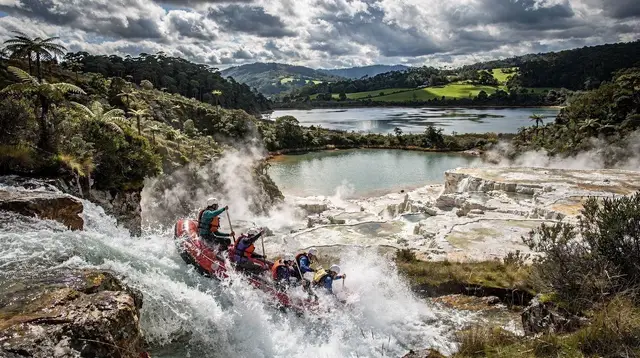
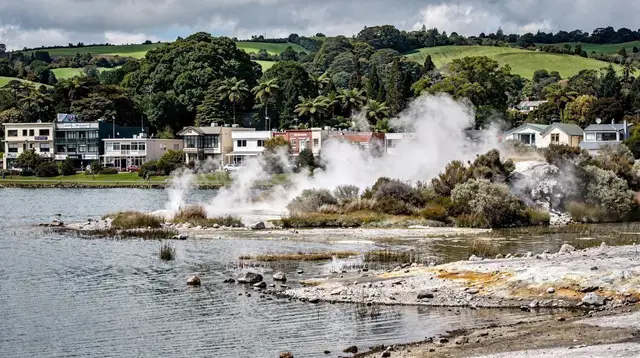
Rotorua sits inside the Taupō Volcanic Zone, so every geothermal park in the area shares the same underlying plumbing: boiling water, sulphur, and steam pushing up through a thin crust. What separates Hell’s Gate, known in Māori as Tikitere, from the rest is intensity. It is widely regarded as the most active geothermal reserve in the Rotorua area, packing the region’s largest boiling mud pool, its hottest recorded features, and some of its most concentrated hydrogen sulphide activity into a single walking loop. If Wai-O-Tapu is colour and Waimangu is scale, Tikitere is force. The ground here does not just steam quietly; it churns, spits, and roars.
The site sits about 16 km northeast of central Rotorua on SH30, on the way toward Lake Rotoiti and Whakatāne. That makes it an easy half-day add-on rather than a full day trip, and a natural pairing with other stops along the same road. It is privately owned and managed by local Māori trustees rather than run as a Department of Conservation reserve, and the land carries deep significance for Ngāti Rangiteaorere, one of the Te Arawa hapū of the district — this is not a generic tourist attraction bolted onto empty land, it is a place with a name, a history, and a resident kaitiaki (guardian) relationship to the ground itself.
What is actually in the ground here
Hell’s Gate covers a walking trail of roughly one and a half kilometres, threaded through a landscape of boiling pools, steaming fissures, and mineral-crusted flats in shades of grey, ochre, and sulphur yellow. Along the way you pass features with names that describe what they do rather than what they look like: a pool that has been recorded among the hottest in the geothermal field, a mud pool wide enough to look more like a small crater than a puddle, and vents where steam comes off the ground hot enough to be genuinely uncomfortable to stand too close to for long.
The smell arrives before the sights do. Hydrogen sulphide — the “rotten egg” gas that defines geothermal Rotorua — is at its strongest here of any park in the district. If you are curious about why the whole region carries this odour and how strong it actually gets at different sites, the guide on why Rotorua smells of sulphur walks through the chemistry and compares intensity across parks. At Hell’s Gate, expect it to be noticeable from the car park and constant throughout the walk. It fades quickly once you leave, and it is not dangerous at the concentrations visitors encounter on the boardwalks, but it is worth mentioning plainly rather than pretending it away — this is the most “nose-first” of Rotorua’s geothermal parks.
Unlike Wai-O-Tapu, Hell’s Gate has no scheduled geyser eruption and no single headline feature you plan your visit around. The appeal is cumulative: pool after pool of visibly violent water, closer to the boardwalk than at most other sites, with fewer of the manicured paths and interpretive polish found at Te Puia. It reads as rawer and less curated, which is exactly the reputation it has built.
The one thing you cannot do anywhere else in Rotorua: get in the mud
Every geothermal park around Rotorua lets you look at a mud pool. Hell’s Gate is the only one where you can get into one. A separate spa complex on site, distinct from the walking trail, offers geothermal mud baths where visitors soak in warm therapeutic mud drawn from the reserve, typically followed by a rinse and a soak in mineral hot pools. The mud is mixed to a bathing temperature well below the boiling pools on the trail — nobody is climbing into the features you walk past on the tour — but it is drawn from the same geothermal system and carries the same sulphurous, mineral-rich character.
Locals and repeat visitors treat this as the reason to choose Hell’s Gate over the other parks rather than as an add-on: see the geothermal field on the walk, then book time in the spa to actually experience what geothermal Rotorua feels like on skin rather than just in front of a camera. If you want the fuller picture of how this compares with Rotorua’s other mud experiences and public mud pools, see the dedicated guide to Rotorua’s mud baths and mud pools. For a wider comparison of geothermal-adjacent spa options in the district, including the well-known lakefront alternative, the guide on what to know about Polynesian Spa is useful context — Polynesian Spa focuses on mineral pools rather than mud, which is part of why the two are often treated as complementary rather than competing choices.
Spa sessions at Hell’s Gate typically run as a set package length rather than an open-ended soak, and are usually booked as an add-on to trail entry rather than purchased alone. Given how site pricing and package structures shift, confirm current inclusions and duration directly with the operator before you go rather than relying on any fixed figure.
How Hell’s Gate compares with Rotorua’s other geothermal parks
Rotorua’s geothermal sites are close together on a map but genuinely different in what they show you. A quick comparison, covered in full in the guide to choosing between Rotorua’s geothermal parks:
| Park | Signature feature | Best known for |
|---|---|---|
| Hell’s Gate (Tikitere) | Largest mud pool in the area | Intensity, smell, walk-in mud bath |
| Wai-O-Tapu | Champagne Pool, Lady Knox Geyser | Colour, a scheduled daily eruption |
| Waimangu Volcanic Valley | Frying Pan Lake, Inferno Crater | Scale, a documented 1886 birth date |
| Te Puia | Pōhutu Geyser | Māori arts and crafts, geyser reliability |
| Whakarewarewa Village | Living village | Lived-in geothermal community, not a reserve |
None of these is strictly “better” — they show different things. Visitors trying to decide between two or three parks in a limited window, rather than doing all of them, will get more out of that dedicated comparison guide than a summary table alone.
Getting there and what a visit actually involves
Hell’s Gate is reached by SH30 heading northeast out of Rotorua toward Lake Rotoiti and Whakatāne, a drive of about 20-25 minutes from the city centre. It is a straightforward self-drive stop with on-site parking; for visitors without a rental car, see the guide on getting around Rotorua without a car for shuttle and tour-pickup options, since several half-day geothermal tours from Rotorua include Hell’s Gate or offer it as a route stop.
The walking trail is largely boardwalk and gravel path, roughly 1.5 km, taking most visitors 45 minutes to an hour at an unhurried pace with time to read the signage and take photos. Add the spa if you are booking one — allow a couple of hours in total for trail plus mud bath. Footwear should be closed and comfortable; some sections are uneven and the ground itself is warm in places even beside the marked path, so staying on the boardwalk matters here more than at gentler sites. For a broader rundown of the everyday precautions that apply across all of Rotorua’s active geothermal ground, see the guide to geothermal safety in Rotorua.
Because conditions at any active geothermal site can shift — new vents, temporary boardwalk closures, changes to opening hours — always check current status with the operator before visiting rather than assuming the trail described here is unchanged.
Who Hell’s Gate suits, and who might skip it
Hell’s Gate rewards visitors who want geothermal Rotorua at full volume: strong smell, visibly violent water, and a landscape that looks genuinely inhospitable in places. That is a feature for some travellers and a reason to choose a gentler park for others. Families with young children can still walk the trail comfortably, but the smell and heat are more intense than at Te Puia or Whakarewarewa Village, so it is worth reading the general notes on visiting Rotorua with kids if that is a deciding factor. Visitors who are sensitive to strong sulphur odours, or who specifically want a geyser eruption to watch, are usually better served by Wai-O-Tapu or Te Puia instead.
For anyone building a themed geothermal day rather than picking a single park, Hell’s Gate pairs naturally with a wet-weather itinerary — geothermal parks in general tend to look more dramatic under grey skies, when steam contrasts more sharply against the air, a point covered in the guide to Rotorua’s rainy day activities. It also fits within a broader plan built around Rotorua’s free things to do if paired with public geothermal spaces elsewhere in town, since Hell’s Gate itself is a paid, privately managed site rather than a public park. Travellers mapping out a longer stay can see how a stop here fits into a wider schedule in the guide to how many days to spend in Rotorua, or follow a ready-made structure in the two-day geothermal itinerary.
If you are weighing several geothermal or guided-day options at once, an organised outing such as the Rotorua eco thermal afternoon tour covers geothermal ground without a rental car, while a combined route like the Wai-O-Tapu and Waimangu boat tour suits visitors who want two other geothermal parks alongside their own visit to Hell’s Gate. Those more focused on Māori arts and culture on the same day might instead look at Te Puia’s guided day tour, which centres on the geyser field and craft institute rather than mud.
Culture and context: whose land this is
Hell’s Gate is not simply a geological curiosity fenced off for visitors. The land belongs to Ngāti Rangiteaorere, part of the wider Te Arawa confederation whose history and relationship with this geothermal landscape stretch back centuries before tourism arrived. For context on how Te Arawa’s connection to the Rotorua area shapes the sites visitors see today, the guide to Te Arawa history in Rotorua is a useful companion read. As with any geothermal site in the district, treating the ground, signage, and any cultural elements you encounter with the same respect you would show a marae is appropriate — this is inhabited, meaningful land, not a natural history exhibit.
Hell’s Gate: frequently asked questions
Is Hell’s Gate worth visiting if I’m already doing Wai-O-Tapu or Te Puia?
It depends on what you want from a second stop. Hell’s Gate does not duplicate either site — it has no scheduled geyser and less colour variation than Wai-O-Tapu, but it has more raw intensity and, uniquely, a mud bath you can actually enter. Visitors doing two geothermal parks in one trip generally find they complement rather than repeat each other.
Can children safely visit Hell’s Gate?
Yes, the walking trail is manageable for families, but the smell and heat are more intense here than at gentler sites like Te Puia or Whakarewarewa Village. Children should stay on the boardwalk at all times, as with any active geothermal ground in the Rotorua area.
How hot is the mud in the mud bath, and is it safe?
The mud used in the bathing pools is prepared and maintained at a therapeutic bathing temperature, well below the boiling features seen on the walking trail — visitors are not entering the same pools they view on the tour. As with any spa treatment, check with staff on site about suitability if you are pregnant or have relevant health conditions.
How long should I plan for a visit?
Budget 45 minutes to an hour for the walking trail alone, or two to three hours if you add a mud bath and spa treatment. Add travel time of about 20-25 minutes each way from central Rotorua.
Does Hell’s Gate have a scheduled eruption like Wai-O-Tapu’s Lady Knox Geyser?
No. Hell’s Gate has no single scheduled event to time a visit around. Its appeal is the overall density and intensity of boiling pools and steam vents along the trail rather than one signature performance.
Is the smell really stronger than at other parks?
Most repeat visitors and locals describe Hell’s Gate as the most sulphur-intense of Rotorua’s geothermal parks, given its higher level of activity. It is not dangerous at the concentrations encountered on the boardwalk, but it is more noticeable than at Te Puia or Wai-O-Tapu.
Do I need a car to get to Hell’s Gate?
A car makes it straightforward, about 20-25 minutes from central Rotorua via SH30. Without one, check shuttle options or a half-day tour that includes Hell’s Gate as a stop; see the guide on getting around Rotorua without a car for alternatives.
Is Hell’s Gate run by the Department of Conservation like some other reserves?
No. It is privately managed by local Māori trustees representing Ngāti Rangiteaorere, rather than operated as a DOC reserve, which is part of why it has its own entry pricing and opening arrangements separate from public geothermal land elsewhere in the district.