Rotorua Hot Pools Guide
Which Rotorua hot pools are worth paying for?
Polynesian Spa and Wai Ariki are the two developed hot-pool complexes and both charge an entry fee. Waikite Valley, about 30 minutes south, draws on the same spring system as Te Manaroa and suits a quieter rural soak. Free public pools exist around town, but water quality and upkeep vary, so treat them as a bonus rather than the main event.
Four soaks, four different waters
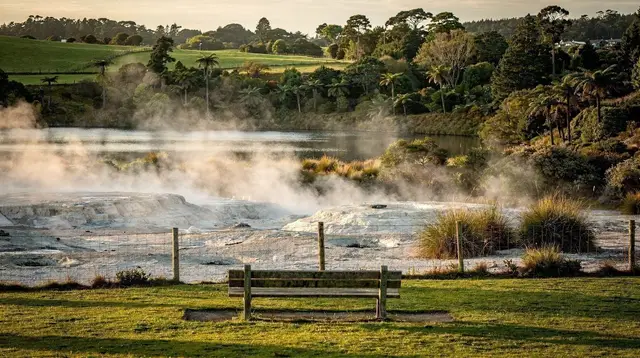
Rotorua sits on a caldera, so hot water is never far from the surface — see why the town smells of sulphur for the geology behind it. What varies is what’s been built around that water. Polynesian Spa is the historic option, drawing on two separate springs. Wai Ariki is the newer, design-led wellness spa on the same lakefront. Waikite Valley is a rural complex fed by one of the hottest springs in the country. And Secret Spot is closer to a natural bush soak with minimal infrastructure. Beyond those four, a scatter of free public pools sits around town and the wider Rotorua area, of wildly varying quality.
None of these is objectively “the best” — they solve different problems. This guide compares water type, price band, atmosphere and who each one actually suits, so you can pick according to your day rather than a marketing line.
| Venue | Water | Price band | Atmosphere | Booking |
|---|---|---|---|---|
| Polynesian Spa | Acidic + alkaline (two springs) | Mid-range | Lakefront, historic, busy at peak times | Public pools walk-in; private pools booked |
| Wai Ariki | Alkaline mineral, hot-cold circuit | High | Design-forward, adults-focused, ritualised | Booking required |
| Waikite Valley | Alkaline, fed by Te Manaroa spring | Budget to mid-range | Rural, bush setting, family-friendly | Usually walk-in |
| Secret Spot | Natural, minimally treated | Budget | Rustic, small-scale, low infrastructure | Varies by operator |
| Free public pools | Variable, unmonitored | Free / koha | Basic to none, condition varies | None |
Acidic vs alkaline: what the mineral difference actually means
Rotorua’s geothermal water isn’t one uniform substance. Two broad types show up across the region, and understanding the difference explains why Polynesian Spa markets two separate springs instead of one.
Acidic (acid-sulphate) water forms nearer the surface, where rising volcanic steam heats shallow groundwater and reacts with sulphur compounds. It tends to carry fewer dissolved minerals overall and can have a slight sharpness that some people notice on broken skin or after shaving. It’s often associated with skin conditions in local tradition, and some visitors find it leaves skin feeling slightly matte rather than silky.
Alkaline (chloride) water rises from deeper in the geothermal system, picking up more dissolved minerals — chloride, silica, sodium — along the way. This is the water most people picture when they imagine a mineral hot pool: clearer, often with a faint silica sheen on the skin afterward, and generally the type used at Wai Ariki, Waikite Valley and in most of the pools at Waimangu-adjacent springs.
Neither type is “better” in a general sense — the difference is more relevant to skin sensitivity and personal preference than to any dramatic health effect, and no operator should be making medical claims either way. Polynesian Spa is the one place in Rotorua where you can compare both in a single visit, since its Lake Spa pools and Priest Spa pools draw on genuinely separate sources. For more on how this fits into the wider geothermal picture, see Rotorua’s geothermal parks compared and the region’s mud baths and mud pools, which run on a related but distinct process.
Polynesian Spa: the historic lakefront pools
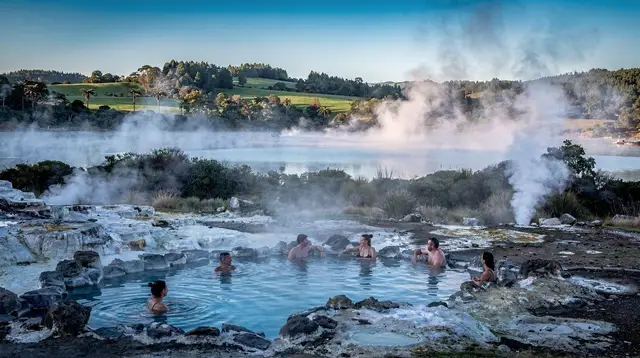
Polynesian Spa sits on the edge of Lake Rotorua, close to the Government Gardens, and has operated in some form since the 1880s — Rotorua’s original reason for attracting visitors at all. Its pools split across the two water types above: the Lake Spa pools draw on the more acidic spring and sit closer to the lake edge, while the Priest Spa pools use the alkaline spring and take their name from a 19th-century belief that the water eased arthritis. A public pools pass gets you a rotation of temperature-graded pools with lake views; private pools and adults-only pools cost more and trade the family atmosphere for a quieter soak.
It’s toward the pricier end of a single Rotorua activity, which matters if you’re budgeting a routine budget-friendly day — but for a first visit to a Rotorua hot pool, this is still the reference point most people compare everything else to. Expect it to be at its busiest around midday and in school holidays, and considerably calmer at either end of the day. Cooler months sharpen the experience: steam rising into cold air over the lake is a large part of the appeal, which is worth weighing when you plan the best time to visit or lean toward a winter trip.
Wai Ariki: newer, Māori-owned, and pricier
Wai Ariki opened more recently on the same lakefront strip and takes a different approach entirely. Instead of a bank of soaking pools at different temperatures, it’s built around a structured hot–cold–rest circuit: geothermal hot pools, a cold plunge, sauna and relaxation spaces, designed as a sequence rather than a free-for-all. It’s Māori-owned, and the design and ritual around the visit draw more directly on te ao Māori wellbeing concepts than a standard day spa — worth reading a little on Te Arawa’s history in Rotorua and general Māori cultural etiquette before a visit, since this isn’t presented as a theme.
It sits at the high end of the price bands for a Rotorua activity, closer to what a premium spa day would cost elsewhere, and it leans toward an adult, wellness-focused crowd rather than families. Booking ahead is close to essential — sessions are often capped and it doesn’t run on the same walk-in model as Polynesian Spa’s public pools. If your day already includes a guided outing, a tour built around a forest walk paired with spa access folds a soak into the itinerary without you having to plan the logistics separately.
Secret Spot: bush pools without the built infrastructure
Secret Spot occupies the other end of the spectrum from Wai Ariki — small-scale, rustic, and much closer to a natural soak than a spa experience. Expect basic changing facilities at best, a bush or paddock setting rather than a designed complex, and a price that sits at the budget end of the scale. The appeal is exactly that lack of polish: fewer people, less structure, and a soak that feels closer to what locals did before any of this became a business.
The trade-off is consistency. Because the infrastructure is minimal, water levels, temperature and access can vary more than at a larger operator, and opening arrangements can change. If a quiet, unpolished soak is the point of the exercise, this is the pick; if you want a guaranteed experience on a tight schedule, Polynesian Spa or Waikite Valley are the safer bookings.
Waikite Valley: the rural soak fed by Te Manaroa
Waikite Valley sits in a valley about 30 minutes south of Rotorua by road, on the way toward Wai-O-Tapu, and draws its water from Te Manaroa — one of the largest boiling springs in the country, discharging water hot enough that it’s cooled through a series of pools before anyone gets in. That cooling gradient is the whole design: pools closer to the source run hotter, pools further down the line run cooler, so you choose your temperature by choosing your pool rather than by adding cold water.
The setting is rural rather than urban — bush and farmland instead of a lakefront promenade — and it sits at the budget-to-mid-range end of the price table, generally cheaper than Polynesian Spa’s private pools and well under Wai Ariki. Families tend to do well here: shallower pools exist alongside deeper ones, and the pace is unhurried compared with the lakefront spas. It pairs naturally with a Wai-O-Tapu morning on the same drive south, and works well within a two-day geothermal itinerary. If your route that day already includes thermal sightseeing, a tour packaged as an afternoon thermal circuit with a pool stop built in saves working out the driving order yourself.
Free geothermal pools around Rotorua
Rotorua doesn’t lack for free geothermal features, even if very few of them are proper soaking pools. Kuirau Park, in the middle of town, is free, geothermal and worth a walk through for its steaming craters and boiling mud, but its foot-bath pools are the extent of what you can actually put yourself into. A short list of small natural soaking pools exists around the wider region, some free, some running on a koha (donation) basis, and condition varies enormously from well-used and reasonably maintained to overgrown and best avoided.
The honest advice here: treat free pools as a bonus you stumble onto or specifically research in advance, not as a guaranteed substitute for Polynesian Spa or Waikite Valley. Water clarity, temperature and hygiene aren’t monitored the way they are at a paying operator, and unmarked geothermal ground can be genuinely dangerous — see geothermal safety in Rotorua before assuming any steaming water is safe to enter. For a fuller rundown of specific free sites and their current condition, this region’s free hot springs covers the detail this page doesn’t have room for.
Which one should you choose
For a first Rotorua visit with no strong preference, Polynesian Spa remains the default — it’s the most complete single experience, with both water types, a range of temperatures and a genuine lakefront setting, at a price that sits mid-table rather than at either extreme. If you’re travelling as a couple or without children and want a more designed, ritualised wellness experience, and the higher price doesn’t put you off, Wai Ariki is worth the booking.
Families and budget-conscious travellers tend to do better at Waikite Valley, especially if it’s combined with Wai-O-Tapu on the same day south of town. Secret Spot suits anyone who specifically wants to avoid a built, commercial feel and doesn’t mind less certainty about facilities. And if soaking isn’t the whole point of the day but you’d rather combine it with being on the water, pairing a guided kayak trip out to lakeside hot pools turns the pool into one stop on an active morning rather than the entire itinerary. None of these are mutually exclusive across a longer stay — see how many days to allow in Rotorua if you’re trying to fit more than one in.
Practical tips for any Rotorua hot pool
A few things apply across all of the above, developed or natural:
- Bring your own towel and jandals (flip-flops) where the venue allows it — hire towels usually cost extra, and bare feet on hot concrete around a pool deck are unpleasant.
- Remove jewellery before soaking in sulphur-rich water — silver in particular tarnishes quickly.
- Hydrate before and after — hot mineral water is dehydrating faster than a normal swim, especially in summer heat; see Rotorua in summer for the wider seasonal context.
- Shower before entering shared pools, which most operators require anyway.
- Don’t linger too long in the hottest pools — ten to twenty minutes at a time is a reasonable guide, with breaks in cooler water or shade between soaks.
- Check accessibility in advance if mobility is a factor — developed venues vary in how graded their pool access is, and natural sites rarely have any.
- Factor accommodation into your plan if you want an early or late soak outside peak hours — see where to stay in Rotorua for options near the lakefront spas.
If your day also includes rafting, a zipline circuit or another adventure activity, a combo built around ziplines and rafting with a free sauna finish is a reasonable way to end an active morning with heat rather than adding a separate paid soak on top.
Rotorua hot pools: frequently asked questions
What’s the difference between acidic and alkaline hot pools in Rotorua?
Acidic (acid-sulphate) water forms near the surface where steam heats groundwater and is generally lower in dissolved minerals, sometimes with a slight edge that can sting broken skin. Alkaline (chloride) water rises from deeper in the geothermal system and carries more dissolved minerals, giving it the silkier feel most people associate with a mineral soak. Polynesian Spa is the one Rotorua venue that separates the two, drawing each type from its own spring.
Is Polynesian Spa worth the price?
For the lakefront setting, the range of pool temperatures and the historic Priest and Lake Spa mineral water, most visitors find it worth one visit, especially in the cooler months when the contrast between hot water and cold air is at its best. It sits toward the pricier end of a Rotorua day out, so it competes for budget with other paid attractions rather than being a cheap add-on.
What is Wai Ariki and how is it different from Polynesian Spa?
Wai Ariki is a newer, Māori-owned wellness spa on the Rotorua lakefront built around a hot-cold-rest contrast circuit rather than a row of soaking pools. It leans into design, ritual and te ao Māori wellbeing concepts, and its entry typically costs more than Polynesian Spa’s standard pools.
Where is Waikite Valley and is it worth the drive?
Waikite Valley is a rural thermal pools complex roughly 30 minutes south of Rotorua, fed by the Te Manaroa spring. It’s worth the drive if you want a quieter, less built-up soak away from town, or if you’re already heading toward Wai-O-Tapu on the same day.
Are there free hot pools in Rotorua?
Yes, a handful of free or koha-based natural pools exist around Rotorua, along with the free geothermal features at Kuirau Park. Facilities are minimal to nonexistent, water temperature and clarity fluctuate, and some sites have safety or access issues, so check current conditions before planning a trip around one.
Can I bring children to Rotorua’s hot pools?
Most of the developed pools, including family pools at Polynesian Spa and the shallower pools at Waikite Valley, welcome children under supervision. Wai Ariki’s adults-focused contrast circuit and most free natural pools are less suited to young children, partly because of water temperature and partly because of uneven, slippery ground.
Do I need to book hot pools in advance?
Wai Ariki and Polynesian Spa’s private pools generally need a booking, especially in peak season and school holidays. Standard public pools at Polynesian Spa and Waikite Valley usually take walk-ins, but a same-day check with the operator avoids arriving to a full car park.
Is it safe to swim in Rotorua’s geothermal water?
Developed pools are managed and monitored for temperature, but natural, unmanaged geothermal water can be scalding, acidic, or harbour organisms that pose a real infection risk, and ground around it can give way. Stick to signed, developed sites or those with a solid local reputation, and treat any unmarked steaming water as off-limits.
Hot pools & spa experiences in Rotorua
Verified deep-linked GetYourGuide tours. Book through these links and we earn a small commission at no cost to you.
Photos show the destination, not the operator's own images.