Rotorua on a Budget: What's Free, What's Worth It, What It Really Costs
How much does a day in Rotorua actually cost?
A backpacker day runs roughly 150 NZD covering hostel, self-catered food, and free geothermal sights. A mid-range day with one paid attraction and a rental car lands near 350 NZD. A high-end day with guided tours and quality dining reaches around 700 NZD.
The Question That Actually Matters: Free vs Worth Paying For
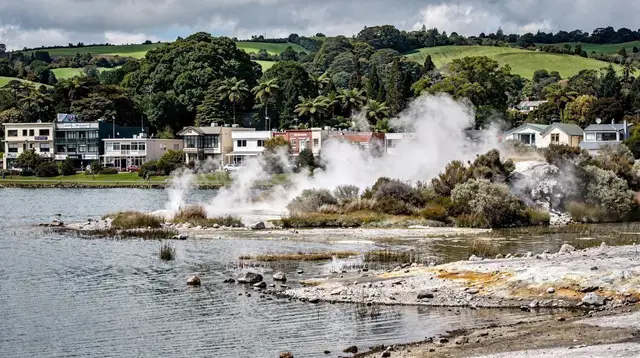
Rotorua has an unusual quirk that makes budgeting here different from most destinations: the thing everyone comes to see - geothermal activity - is partly free. Steam rises from storm drains on ordinary streets, the sulphur smell is in the air whether you’ve paid an entrance fee or not, and one entire public park sits on an active geothermal field with no ticket booth. That means the real budgeting decision in Rotorua isn’t “can I afford this place” but “which specific paid experiences are worth adding on top of what’s already free.”
This guide splits the town along that line: what costs nothing, what’s worth the money anyway, which combos quietly cut the bill, and what a full day genuinely costs at three different spending levels. For a broader sense of how many days to allow before worrying about cost, see how many days in Rotorua makes sense for your trip.
What’s Genuinely Free in Rotorua
Kuirau Park is the standout: a public, gate-free park in the middle of town with steaming craters, bubbling mud, and free foot-bath pools you can walk straight into. It’s the single best free introduction to what Rotorua’s geothermal field actually looks like up close, and it costs nothing beyond getting there on foot.
Ōhinemutu, the lakeside Ngāti Whakaue village a short walk from the town centre, is another free stop - wander respectfully past the meeting house and St Faith’s church, where a Christ figure is etched into a window overlooking Lake Rotorua. It’s a living village, not an exhibit, so quiet observation rather than wandering into private areas is the expected etiquette.
The Lake Rotorua waterfront itself costs nothing to walk, and several tracks through the Redwoods / Whakarewarewa Forest are free during daylight hours - it’s only the elevated canopy walkway and night-lit routes that charge admission. A rundown of specific routes is in free walking tracks around Rotorua.
Scattered around the wider Rotorua lakes are a handful of natural hot springs that cost nothing to use, unlike the commercial hot pool complexes in town - covered in detail in free hot springs around Rotorua. For a fuller list beyond these highlights, free things to do in Rotorua rounds up the complete set.
What’s Worth Paying For Anyway
Free geothermal viewing has a ceiling: Kuirau Park shows you steam and mud, but it doesn’t show you Champagne Pool’s colour, a geyser firing on a predictable schedule, or the specific craters formed by a documented 1886 eruption. The paid parks exist because they protect and access features the free spots simply don’t have.
Wai-O-Tapu, about 27 km south on SH5, is the clearest example - the orange-rimmed Champagne Pool and the Devil’s Bath are unlike anything visible from a public street, and the Lady Knox geyser performs on a fixed daily schedule. Whether it beats the alternatives for your specific priorities is covered in visiting Wai-O-Tapu, and if you’re torn between the geothermal parks generally, which geothermal park to choose walks through the trade-offs.
Te Puia, inside the Whakarewarewa valley, adds a layer Wai-O-Tapu doesn’t: it’s the national institute for Māori arts and crafts, and it’s where Pōhutu, the most reliable geyser in the southern hemisphere, erupts once or twice an hour. Its neighbour, the Whakarewarewa Living Māori Village, offers a genuinely different angle - a community that still lives and cooks using the geothermal steam, rather than an institute. The distinction between the two is worth reading before booking either: see Te Puia vs Whakarewarewa Village.
A structured way to get both geothermal scenery and Māori culture without piecing it together yourself is a half-day tour that packages several sites:
an afternoon eco-thermal tour covering a working geothermal reserve without a full-day commitmentFor a deeper cultural add-on with a hāngī meal and haka performance included, what a hāngī actually is explains what you’re paying for before you book one, and a broader comparison of cultural experiences is in Māori cultural experiences compared.
The Hot Pool Question
Rotorua’s commercial hot pool complexes are a separate spending decision from the geothermal parks. They’re not sightseeing - they’re a soak, and the appeal is purely the experience of sitting in naturally heated water. Whether that’s worth paying for when free natural hot springs exist nearby comes down to comfort and facilities: a commercial pool complex has changing rooms, food, and consistent water quality; a free spring has none of that. Both options, with their trade-offs, are laid out in Rotorua’s hot pools guide and, for the most well-known complex specifically, what to know before visiting Polynesian Spa.
Combos That Actually Cut the Bill
The most reliable way to lower Rotorua’s adventure-activity costs isn’t finding a discount - it’s booking a combo that bundles several activities operators would otherwise charge for separately, plus the transfers between them.
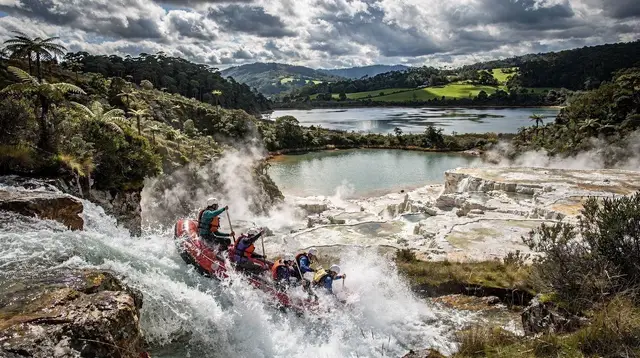
Ziplining and whitewater rafting are commonly sold together, often with a hot pool or sauna session included at the end, which removes a second booking and a second transfer:
a combined ziplining and rafting day that finishes with a free sauna sessionA similar combo swaps the sauna for a soak in a hot pool afterwards, which suits travellers who’d rather end an adventure day relaxing than in a heated room:
an equivalent zipline and rafting combo ending in a hot pool rather than a saunaIf your budget doesn’t stretch to adventure sports at all, low-cost, low-effort entertainment still exists in town - a round of mini golf is a genuinely cheap way to fill an afternoon between free sights:
an easy, inexpensive mini golf session to break up a day of sightseeingFor readers weighing whether a rafting trip is worth adding at all, Kaituna River rafting guide and, for zipline options specifically, Rotorua’s ziplines compared both help decide before you spend on a combo.
At the other end of the spectrum, if the trip budget allows for one genuine splurge, a guided day combining Te Puia’s geothermal reserve with a cultural performance covers both the geyser and the living-culture side in one paid booking rather than two separate entrance fees:
a guided day at Te Puia combining the geothermal reserve with a cultural performance
Three Real Daily Budgets
These are per-person, per-day figures covering food, one attraction where noted, local transport, and accommodation - not flights or a multi-day car rental.
| Level | Daily budget (NZD) | What it typically includes |
|---|---|---|
| Backpacker | ~150 | Hostel dorm or campground, self-catered meals, free geothermal parks and walks, no paid attraction |
| Mid-range | ~350 | Private hotel room, casual restaurant meals, rental car, one paid attraction (Wai-O-Tapu or Te Puia) |
| High-end | ~700 | Quality accommodation, full-service dining, one or two guided tours, a cultural evening with hāngī |
Converted roughly, 150 NZD is about 81 EUR or 88 USD; 350 NZD is about 189 EUR or 206 USD; 700 NZD is about 378 EUR or 412 USD, using approximate rates of 1.85 NZD per EUR and 1.70 NZD per USD. These move with exchange rates, so treat them as a planning guide rather than a fixed figure.
New Zealand’s 15% goods and services tax is already folded into every price you see displayed, and tipping isn’t expected anywhere - both work in a budget traveller’s favour, since the sticker price is genuinely the final price. More detail on this and other cost basics is in tipping and costs in New Zealand.
Getting Around Without Inflating the Budget
A rental car is the single biggest lever on cost in either direction. Skip it and you save the daily rental plus fuel, but you’re limited to what’s walkable or shuttle-served from town - largely the free in-town sights plus whichever paid attraction runs a transfer. Add a car and out-of-town day trips to Wai-O-Tapu, Waimangu, or further afield become straightforward, but the car itself is a fixed daily cost regardless of how many places you actually visit.
For visitors without a car, getting around Rotorua without a car covers what’s realistically reachable by shuttle or on foot, and guided tours vs self-drive weighs the two approaches directly. If day trips are part of the plan regardless, Rotorua day trips lists which destinations justify the extra transport cost.
Where to Sleep for Less
Holiday parks and campgrounds around the Rotorua lakes are consistently the cheapest accommodation option and put campervan and tent travellers within easy reach of the free in-town sights. Hostel dorms in town are the next tier up in cost and convenience. Both options, along with what to expect at each, are detailed in Rotorua’s holiday parks and camping.
A Sample Low-Cost Day
Morning: walk through Kuirau Park, free, then continue to Ōhinemutu to see St Faith’s church and the lakefront - both free and within easy walking distance of most town-centre accommodation. Midday: a self-catered lunch, then a free walking track through the Redwoods / Whakarewarewa Forest. Afternoon: one paid stop, ideally a half-day option like the eco-thermal tour above rather than a full-day park entry, to keep the single big expense of the day contained. Evening: a casual dinner back in town. That structure keeps the day close to the backpacker end of the budget table while still including one genuinely paid experience rather than skipping paid attractions entirely.
For a version of this stretched across an entire trip rather than a single day, Rotorua on a budget over three days lays out a fuller itinerary built around the same free-versus-paid logic.
Frequently Asked Questions About Rotorua on a Budget
How much does a day in Rotorua actually cost?
It depends heavily on which attractions you pay for. A budget day sticking to free geothermal parks, self-catered meals, and hostel or campground accommodation runs around 150 NZD per person. A mid-range day adding one paid attraction, a rental car, and casual dining is closer to 350 NZD. A high-end day with guided tours and full-service dining can reach 700 NZD.
What can you do in Rotorua for free?
Kuirau Park’s steaming craters and free foot baths, the lakefront at Lake Rotorua, Ōhinemutu village and St Faith’s church, several walking tracks through the Redwoods forest, and a handful of natural hot springs around the lakes cost nothing beyond getting there.
Is Wai-O-Tapu or Te Puia worth the entry price?
Both charge an entrance fee that is noticeably higher than the free geothermal spots, but they show features - Champagne Pool’s colour, the timed Lady Knox eruption, Pōhutu geyser, living Māori culture - that Kuirau Park and roadside steam vents simply don’t have. For most visitors, picking one paid park rather than skipping all of them is the better trade-off.
How do combo tours save money in Rotorua?
A combo bundling several adventure activities into one booking, such as ziplining, rafting, and a hot pool or sauna finish, typically costs less than booking each activity separately, and it also saves a full day of transfers between operators.
Is Rotorua cheaper than Queenstown or Taupō?
Rotorua and Taupō are broadly similar in cost. Queenstown, on the South Island, tends to run noticeably higher across accommodation and adventure activities, though that comparison matters only if your trip covers both islands.
Do you need a car to keep costs down in Rotorua?
Not necessarily. The town centre, Ōhinemutu, the lakefront, and Kuirau Park are walkable, and some geothermal parks run shuttle transfers. A car mainly pays for itself if you’re combining several out-of-town attractions in one day.
Is it worth paying for a geothermal park if the smell and steam are free anyway?
The sulphur smell and roadside steam are free everywhere in Rotorua, but the specific features inside paid parks - coloured pools, mud that actually bubbles, a geyser on a predictable schedule - aren’t visible from outside the gate, so the free version and the paid version are genuinely different experiences.
What’s the cheapest way to sleep in Rotorua?
Holiday parks and campgrounds around the lake are consistently the lowest-cost option, followed by hostel dorms in town. Both put you within walking or short driving distance of the free attractions.
Good-value Rotorua tours on GetYourGuide
Verified deep-linked GetYourGuide tours. Book through these links and we earn a small commission at no cost to you.
Photos show the destination, not the operator's own images.