What the Tiaki Promise Actually Asks of You
Why I stopped treating it as a poster
The first time I saw the Tiaki Promise, it was a laminated sign at the airport, next to the usual duty-free ads, and I filed it under the same category: something a tourism board pays a design agency to produce, then forgets. I’ve since spent enough time in and around Rotorua to think that filing it there was wrong, and I want to explain why, because the gap between “nice sentiment” and “thing that actually changes what you do at 9am on a Tuesday” is exactly where this article sits.
Tiaki is a Māori word, and it doesn’t translate cleanly to “sustainability” or “respect,” the words the English version of the pledge tends to reach for. It’s closer to guardianship, an active, ongoing responsibility rather than a one-off gesture of politeness. The promise itself, run by Tourism New Zealand, asks visitors to commit to three things: caring for land, sea, and nature; travelling safely, showing care and consideration; and respecting culture, travelling with an open heart and mind. None of that is enforced at the border. No official checks whether you meant it. Which is exactly why I think it matters more, not less, in a place like Rotorua.
What it actually asks of you here, concretely
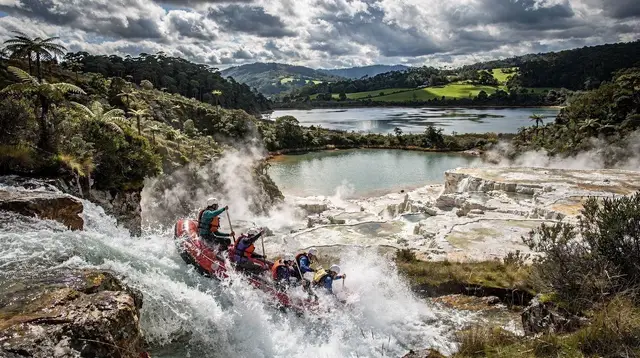
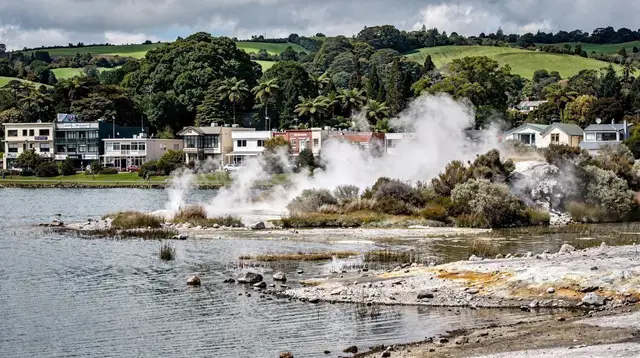
Rotorua sits on an active caldera in the middle of the Taupō volcanic zone, and that geography turns some of the promise’s abstractions into specific, checkable behaviour. “Care for the land” here isn’t really about litter, though litter matters too. It’s about staying on marked paths at geothermal sites, because the ground genuinely is not stable everywhere and a thin crust over boiling water is not a metaphor. I’ve read enough incident reports from parks in this region to take that seriously rather than treat it as an overcautious sign. If you want a fuller picture of what that risk actually looks like and how to manage it sensibly, I’d read our guide to geothermal safety in Rotorua before your first visit to a thermal park, not after.
“Respect culture” has a similarly concrete shape here. Rotorua is the heart of Te Arawa country, and a fair amount of what visitors come to see, from carved meeting houses to hot pools, sits on land that is lived on and cared for, not curated for tourists. That means things like not photographing people or interiors without asking, following the etiquette at a marae rather than improvising your own, and understanding why a place like Rotokākahi is off-limits rather than just fenced. I’ve written more on the specifics in our guide to Māori cultural etiquette in Rotorua, and on the deeper context in our guide to Te Arawa history, because etiquette without context tends to become box-ticking.
The third strand, travelling safely, is the one visitors underrate most. New Zealand’s roads are narrower and slower than most people expect, weather changes fast, and a rescue call-out in a remote part of the North Island pulls on volunteer services, not a large city fire department. Driving to conditions rather than to the speed limit, checking track status before a walk, and being honest about your own fitness on something like a longer geothermal walk or a Tarawera hike are all part of the same promise, even though they rarely make it onto the poster version.
Why it isn’t decorative, in my view
I’ve gone back and forth on whether pledges like this actually change anything, and I’ve landed on: partially, and unevenly, but not nothing. The honest case against it is that a voluntary pledge with no enforcement is easy for tourism marketing to hide behind while doing little else. I don’t think that criticism is wrong, exactly, and I’d point anyone sceptical toward a more honest verdict on Rotorua’s tourism industry for a less polished take on the town’s tourism machinery generally.
But the case for it, at least in Rotorua specifically, is that the alternative to a shared expectation isn’t neutral, it’s worse. Sites here have already closed or restricted access because of visitor behaviour, and guided cultural experiences exist partly as a structure that makes respectful visiting the default rather than something you have to figure out alone. A short guided visit to a living village, for instance, does a lot of the Tiaki Promise’s work for you simply by giving you a host who tells you what’s appropriate before you find out the hard way. If you’d rather have that context built into the visit itself rather than assembled from guides beforehand, a short shared cultural and thermal tour built around the Tiaki Promise does exactly that, pairing a geothermal park with a Māori-guided introduction rather than leaving you to interpret the signage solo.
For a similar structure with fewer people and more time spent, I’d look at a smaller eco-focused thermal afternoon tour, which tends to spend longer explaining the geology and the guardianship angle rather than moving quickly between photo stops. And if your itinerary already includes the region’s two best-known thermal parks, a combined Wai-O-Tapu and Waimangu day trip with transport included removes the self-drive variable entirely, which matters if you’re still finding your feet with driving on the left through geothermal countryside.
What I actually do differently because of it
Practically, the promise changes three small things about how I plan a Rotorua trip. I build in more time at geothermal parks than I think I need, because rushing is how people end up off the boardwalk. I check whether an experience is Māori-owned or Māori-guided before I book it, not as a box to tick but because it usually means the context comes built in. And I plan driving days more conservatively than I would at home, treating the extra half hour as the actual plan rather than a buffer I’ll skip if running late.
None of that is dramatic, and none of it is enforced by anyone. That’s rather the point. The Tiaki Promise works, to the extent it does, by asking visitors to hold themselves to a standard rather than waiting to be told. In a town sitting on an active caldera and home to a living culture that predates the tourism industry by centuries, I think that’s a reasonable thing to be asked, and I’d rather meet it than treat it as background noise at the arrivals hall.
Common questions about the Tiaki Promise
What is the Tiaki Promise and is it compulsory?
It’s a voluntary pledge New Zealand asks visitors to make to care for the land, sea, and culture, and to travel safely. It isn’t a legal document or a condition of entry, but in a place like Rotorua, built on active geothermal ground and living Māori communities, it maps onto real, checkable behaviour rather than staying a slogan.
Where did the Tiaki Promise come from?
Tourism New Zealand and industry partners launched it as a response to visitor numbers growing faster than the country’s small towns and fragile sites could quietly absorb. It draws on the Māori concept of kaitiakitanga, guardianship of people and place, rather than being invented from scratch for marketing purposes.
Do I have to sign anything to make the Tiaki Promise?
No. There’s an online pledge you can read and tick if you want to, but nobody checks it at the border. What matters in practice is whether your choices on the ground match it, not whether you filled in a form before you left.
How is the Tiaki Promise different in Rotorua from the rest of the country?
Elsewhere it’s mostly about tracks, beaches, and driving. In Rotorua it also covers geothermal ground that can genuinely hurt you if you leave a marked path, and Māori land and marae where the usual tourist habit of wandering in and photographing whatever looks good simply doesn’t apply.
What happens if a visitor ignores it?
Nothing formal in most cases, which is part of the problem. There’s no fine for stepping off a boardwalk at a geothermal park, though operators can and do refuse entry or stop a tour. The real consequences are a burn, a closed track for everyone else, or a cultural site that stops being open to visitors at all.
Does the Tiaki Promise apply to freedom camping and driving?
Yes, and this is where most visitor complaints actually originate. It asks you to camp only where it’s legal, deal with waste properly, and drive to New Zealand’s roads and conditions rather than your usual pace at home, which is a separate and serious safety issue on its own.
Is the Tiaki Promise just about the environment?
No. It has three strands that get mentioned far less evenly: caring for land and sea, respecting culture, and travelling safely so you don’t become a burden on local emergency and rescue services. In Rotorua, the second and third strands come up daily, not just the first.
If you’re still deciding how much time to give this part of the North Island, how many days to spend in Rotorua and Rotorua’s free things to do are useful next stops, and New Zealand’s entry requirements and the NZeTA covers the paperwork side of arriving that sits alongside this pledge rather than inside it.
Trip-planning essentials on GetYourGuide
Verified deep-linked GetYourGuide tours. Book through these links and we earn a small commission at no cost to you.
Photos show the destination, not the operator's own images.