A 3-Day Winter Rotorua Itinerary: Steam, Pools and Ruapehu
Winter in Rotorua runs from June to August, and it changes the geothermal landscape more than it changes the plan. Steam that gets bleached out by summer haze turns dense and visible against cold air. Hot pools stop being a novelty and start being the obvious thing to do at the end of a cold day. Crowds at the big sites thin out. This three-day itinerary leans into that: two days built around Rotorua’s geothermal core and hot water, and a third spent on a day trip toward Tongariro National Park, about two hours south, where the mountains carry the winter that Rotorua itself mostly doesn’t get.
Why Winter Changes the Rotorua Experience
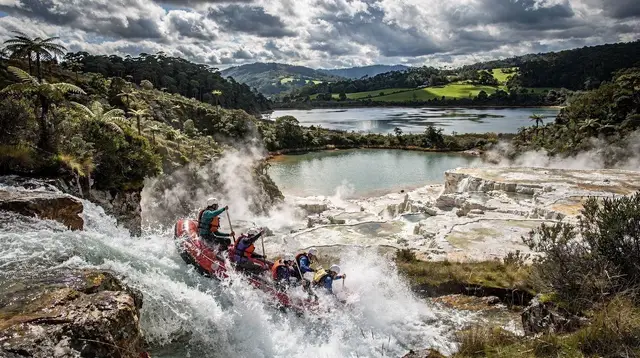
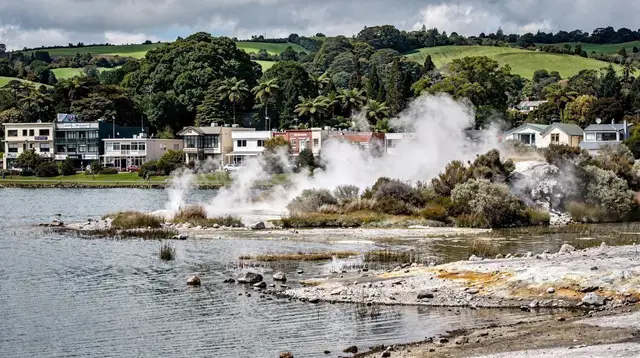
Rotorua sits inside the Taupō Volcanic Zone, so the geothermal activity - steam vents, mud pools, geysers - runs all year regardless of season. What changes is the air temperature around it. Daytime highs in winter sit around 12-13°C, mornings are cold and sometimes frosty, and that temperature gap is exactly what makes steam plumes at places like Wai-O-Tapu and Te Puia look denser and more photogenic than in summer. It does not snow in Rotorua town itself - snow belongs to Ruapehu and Ngauruhoe, not the lakeside city - so don’t pack for alpine cold until day three. For a fuller seasonal picture before you commit to dates, see the guide to Rotorua in winter and the month-by-month weather breakdown.
Rain falls throughout the year here - roughly 140 days of it - so winter isn’t unusually wet compared to other seasons, just colder. None of the activities below close for rain; several arguably work better under an overcast sky.
Day 1: Rotorua’s Geothermal and Cultural Core
Start in town. Rotorua sits on an active caldera at the centre of the Taupō Volcanic Zone, which is why steam rises from drains and pavement cracks across the city - more visible in winter’s cold air than at any other time of year. Spend the morning at Whakarewarewa, the thermal valley shared between the living village of Tūhourangi Ngāti Wāhiao, where residents still cook using geothermal steam, and Te Puia, the national institute for Māori arts and crafts. Te Puia is also where Pōhutu, the most reliable geyser in the Southern Hemisphere, erupts once or twice an hour, sometimes reaching around thirty metres - a sight considerably more dramatic when the surrounding air is cold enough to hold the steam together rather than scatter it.
An afternoon eco-thermal tour around Rotorua’s geothermal sites is a practical way to cover several thermal features without driving yourself between them, useful on a short winter afternoon when daylight runs out earlier than in summer.
In the late afternoon, head to Ōhinemutu, the Ngāti Whakaue village within the city, to see St Faith’s Church and the Christ figure etched into a window above the lake - a short, free stop that fits easily before dinner. Round off the day with a hāngī, the traditional earth-oven meal that in Rotorua is often steamed using geothermal heat rather than the buried-fire method used elsewhere; the guide to hāngī explains what to expect and where it’s typically served. Finish, if you have the energy, with an evening soak - see Rotorua’s hot pools and what to know about Polynesian Spa for options. Sinking into naturally hot water while your breath fogs in the cold night air is, for a lot of winter visitors, the single clearest reason to come at this time of year.
Day 2: Wai-O-Tapu, the Buried Village and the Redwoods at Night
Devote the morning to Wai-O-Tapu, about 27 kilometres south of Rotorua on State Highway 5. This is the park with the Champagne Pool and the Devil’s Bath, both of which hold their colour regardless of season, plus the Lady Knox geyser, triggered each morning at 10:15 with a surfactant rather than erupting naturally. Arrive in good time for that, since it runs on a fixed schedule rather than Pōhutu’s more unpredictable rhythm. A general Wai-O-Tapu entry ticket covers the self-guided walking loops through the park. For visiting logistics and what each trail covers, the Wai-O-Tapu visiting guide is worth reading beforehand, and choosing between Rotorua’s geothermal parks helps if you’re deciding how much time to give this one versus others.
In the afternoon, on the way back toward Rotorua, stop at Te Wairoa, the buried village, destroyed along with the Pink and White Terraces in the 1886 eruption of Mount Tarawera. A visit to the excavated site pairs naturally with the Wai-O-Tapu morning, since both sit on the same road south of town, and an entry ticket to the Buried Village of Te Wairoa covers the museum and walking trail down to the waterfall.
Save the evening for The Redwoods - Whakarewarewa Forest, planted with Californian sequoias in 1901 and now home to one of the world’s better-regarded mountain bike networks. Winter shortens the days considerably, which works in this forest’s favour: the canopy walkway runs both by day and after dark, and the shorter winter daylight means the night version starts earlier in the evening than it would in summer, without cutting into the rest of your itinerary. See the Redwoods Treewalk guide for the difference between the two.
Day 3: A Day Trip Toward Tongariro National Park
The third day is a longer one: Tongariro National Park sits roughly two hours south of Rotorua by road, and this is the day the itinerary’s winter framing matters most, because this is where the season actually looks like winter. Tongariro was New Zealand’s first national park and remains a dual UNESCO World Heritage site for both natural and cultural values, home to Ngauruhoe and Ruapehu, at 2,797 metres the North Island’s tallest peak and its main ski area.
Be realistic about the season before you leave: the Tongariro Alpine Crossing, the 19.4-kilometre, six-to-eight-hour day walk that draws most visitors here in summer, is not a casual undertaking in winter. Under snow and ice it becomes an alpine route that the Department of Conservation recommends only for people with mountaineering experience and proper equipment, or with a guided operator equipped for winter conditions. Read the Tongariro Alpine Crossing from Rotorua guide before assuming you can walk in on a whim. For most visitors on a three-day trip, the better winter plan is to drive up to Whakapapa Village at the base of Ruapehu, walk one of the shorter, lower-elevation tracks near the visitor centre, and - snow and lift operations permitting - spend part of the day skiing or simply looking at genuinely snow-covered mountains, something Rotorua itself never offers.
Check conditions before you go, since road access near the mountain can turn icy overnight even when Rotorua stays mild.
Head back to Rotorua in the late afternoon; with an early start, this is a full but manageable single day rather than an overnight trip. If you’d rather not self-drive it, driving in New Zealand for visitors covers what to expect on unfamiliar roads, including driving on the left.
Three-Day Overview
| Day | Focus | Approx. drive time | Key stop |
|---|---|---|---|
| 1 | Rotorua geothermal and culture | Minimal, in-town | Te Puia / Whakarewarewa, hāngī |
| 2 | Wai-O-Tapu and the Buried Village | ~30-40 min each way | Champagne Pool, Lady Knox at 10:15 |
| 3 | Day trip toward Tongariro National Park | ~2 h each way | Whakapapa Village, Ruapehu |
Practical Notes for a Winter Visit
Layers matter more than any single piece of gear: a warm midlayer, a waterproof shell, and closed shoes with grip for wet, uneven ground around thermal features. Pack swimwear and a towel regardless of how cold it is outside - hot pools are one of the better reasons to be here in winter rather than despite it. New Zealand’s biosecurity checks are strict, so hiking boots and any camping gear need to be clean and declared. On cost: a rough guide for New Zealand travel puts budget spending around 150 NZD per person per day, mid-range around 350 NZD, and higher-end around 700 NZD - all prices you see already include the 15% GST, and tipping isn’t expected anywhere on this itinerary.
If you’d rather cover Wai-O-Tapu and other thermal sites on a single organised day instead of self-driving, a full-day tour combining Wai-O-Tapu, Waimangu and Te Puia compresses much of Day 1 and Day 2 into one guided outing, useful if winter daylight or driving conditions make you want fewer separate trips behind the wheel.
Rotorua Winter Itinerary FAQs
What is the weather like in Rotorua in winter?
Daytime maxima sit around 12-13°C, with cold, sometimes frosty mornings. Rain falls throughout the year in Rotorua, roughly 140 days annually, so winter is not markedly wetter than other seasons - just colder. It almost never snows in Rotorua itself; snow belongs to the mountains, not the town.
Do the geothermal parks still work in winter?
Yes, and many visitors find them better. The steam plumes at Wai-O-Tapu, Te Puia and Whakarewarewa show up far more clearly against cold air, and the contrast between hot ground and cold surroundings is part of the appeal. Rain doesn’t close these parks; some say the colours at Wai-O-Tapu look even sharper on an overcast day.
Can you drive to Tongariro National Park from Rotorua in winter?
Yes, the drive takes around two hours each way and the road is generally maintained, though conditions near the mountain can turn icy or snowy overnight. Check current conditions before leaving, carry warm layers, and allow extra time - this is a day trip, not a stop on the way to somewhere else.
Is the Tongariro Alpine Crossing possible in winter?
Not as a casual walk. In winter the crossing becomes an alpine route covered in snow and ice, and the Department of Conservation recommends it only with mountaineering experience, proper equipment, or a guided operator. Most visitors on this itinerary are better off viewing the mountains from Whakapapa Village or, if conditions allow, skiing on Ruapehu instead.
Do I need a car for this itinerary?
A car makes this itinerary far more workable, particularly for the day trip toward Tongariro National Park, where public transport options are limited and timings matter in winter light. Rotorua’s central geothermal and cultural sites can be reached without one, but the third day is much easier self-driving or on an organised tour.
What should I pack for three winter days around Rotorua?
Layers are the key: a warm midlayer, a waterproof outer shell, gloves and a hat for cold mornings, and closed shoes with grip for wet ground near thermal features. Swimwear and a towel matter as much as anything else, since hot pools are a central part of a winter visit. New Zealand’s biosecurity rules mean hiking boots and any camping gear need to be clean and declared on arrival.
How much does a 3-day winter Rotorua trip cost?
As a rough guide, budget travellers can expect to spend around 150 NZD per person per day, mid-range travellers around 350 NZD, and higher-end travellers around 700 NZD, before add-ons like guided tours or a day trip toward Tongariro. New Zealand’s 15% GST is already included in every price you see, and tipping isn’t expected.
tours.3 days
Verified deep-linked GetYourGuide tours. Book through these links and we earn a small commission at no cost to you.
Photos show the destination, not the operator's own images.