Rotorua in Winter
Is Rotorua worth visiting in winter?
Yes. June to August brings fewer visitors, lower prices, and geothermal steam that is more dramatic in cold air, since the temperature contrast pushes columns higher. Daytime highs sit around 12-13°C with morning frosts, and Ruapehu's ski fields are about two hours away. Some outdoor operators reduce hours or pause for weather, so it pays to check ahead.
What winter actually looks like here
New Zealand’s seasons run opposite to the northern hemisphere’s, and in Rotorua that means winter falls in June, July and August. There’s no snow at street level, no ice on the footpaths, and no dramatic seasonal shutdown. What you get instead is a quieter, colder, steamier version of the same geothermal city that draws crowds in summer. If you’re weighing up when to visit Rotorua at all, winter is a legitimate answer, not a compromise one — it just asks you to pack differently and plan around shorter daylight.
Daytime highs typically sit around 12-13°C, a noticeable drop from summer’s low-to-mid 20s, and mornings are often properly cold with frost on car windscreens and steam hanging low over Kuirau Park before the sun burns through. Rain falls in Rotorua throughout the year — roughly 140 days of it annually, spread fairly evenly across the calendar — so winter isn’t defined by extra rainfall so much as by extra cold. Overcast days and lower cloud can make the town feel greyer, and daylight hours shrink noticeably compared to the long summer evenings. For the month-by-month detail, Rotorua’s weather patterns are worth a look before you land on travel dates.
Why the steam looks better in winter
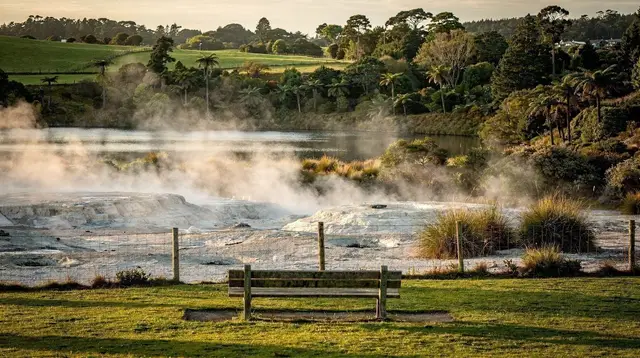
This is the detail most first-time winter visitors don’t expect: Rotorua’s geothermal features often look more dramatic in June, July and August than they do in summer. Rotorua sits inside the Taupō Volcanic Zone, a roughly 250-kilometre tear in the earth’s crust, and heat rises constantly through vents, fumaroles and thermal ground across the city and its surrounding valleys. That heat doesn’t change with the seasons — the air around it does. Cold winter air creates a much sharper temperature contrast with the escaping steam, so columns rise higher, hang longer, and photograph more clearly against a grey or blue sky than they do in the warm, humid air of a summer afternoon.
Walk through Kuirau Park on a frosty July morning and the vents along the boardwalk can look genuinely otherworldly, with steam rolling across the grass in a way that summer visitors rarely see. The same effect shows up at Wai-O-Tapu, where the Champagne Pool and Devil’s Bath sit under visible clouds of vapour, and at Te Puia and Whakarewarewa Village, where the geothermal valley’s fumaroles seem to work harder simply because the surrounding air is colder. None of this is a seasonal show put on for visitors — it’s the same continuous geology, just easier to see.
If you’re deciding which thermal park to prioritise on a winter trip, the general comparison in choosing between Rotorua’s geothermal parks still applies, and the detailed Wai-O-Tapu visiting guide covers what to expect at the gate regardless of season. Pōhutu Geyser at Te Puia keeps its own schedule independent of weather — see when Pōhutu erupts if timing a visit around it matters to you.
an afternoon eco-thermal tour around Rotorua’s geothermal sites is one straightforward way to see several thermal areas in a single guided outing without driving between them yourself in the cold.
Hot pools: arguably better in winter, not worse
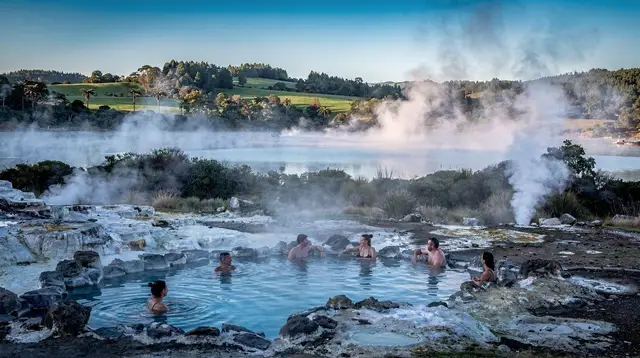
If there’s one activity that genuinely improves in winter, it’s soaking in naturally heated water. The contrast between a warm pool and cold surrounding air is part of the appeal, and Rotorua’s hot pools operate on the same schedule year-round regardless of season. The general guide to Rotorua’s hot pools covers the main options, from commercial spa facilities to more rustic settings, and what to know before visiting the Polynesian Spa is useful if that’s on your list.
Budget travellers shouldn’t assume winter closes off the free options either — free hot springs around Rotorua exist year-round, though a cold, low-light winter evening is not the moment to go looking for an unmarked bush pool for the first time; go with clear directions or a local recommendation.
Skiing on Ruapehu, roughly two hours away
Winter is the one season that adds an activity Rotorua doesn’t otherwise offer: snow sports. Mount Ruapehu, at 2,797 metres, sits inside Tongariro National Park and carries the North Island’s main ski fields. From Rotorua it’s roughly a two-hour drive south, which makes it feasible as a long day trip but genuinely more comfortable as an overnight, particularly if you want a full day on the slopes rather than a few hours bookended by driving in the dark.
The road down passes through Taupō, which is worth building into the trip either as a stop or a base of its own — see Rotorua versus Taupō as a base if you’re undecided. Conditions on the mountain vary through the season and depend on snowfall that year, so check the ski field’s own reports before committing to a date, and note that access roads up the mountain can close temporarily in poor weather. This isn’t a detail this guide can promise a number on — snow depth and lift status change week to week, and the operator is the only reliable source on the day.
Ruapehu also anchors the Tongariro Alpine Crossing, though winter conditions on that track are a different proposition from the summer walk — snow and ice on an alpine crossing call for proper equipment and experience, or a guided trip, not a casual day-hike mindset.
Ski day or stay local: the honest trade-off
If you only have one spare day and are weighing a Ruapehu ski day against staying around Rotorua, it’s worth being honest about what a single-day round trip actually involves. Four hours of driving bookends whatever time you spend on the mountain, conditions are never guaranteed even with a good forecast, and access roads occasionally close for weather with little notice. A one-day return trip works, but it leaves less margin than most people expect.
Staying in Rotorua instead trades snow for the city’s own winter strengths: steam that photographs better than it does in summer, quieter geothermal parks, and hot pools that arguably suit the season more than the beach-adjacent appeal they have in January. Neither choice is objectively better — it comes down to whether skiing is the reason for the trip or an add-on to it. Travellers who genuinely want a ski day are generally better served treating it as its own overnight excursion rather than squeezing it into a Rotorua-based itinerary.
What closes, and what doesn’t
Rotorua doesn’t have a hard seasonal shutdown the way some ski towns or beach resorts do. The geothermal parks, Māori cultural experiences, hot pools and museums all keep running through winter, because none of them depend on warm weather to function — geothermal heat doesn’t care what month it is, and indoor cultural performances and hāngī dinners run year-round.
Where winter does bite is in outdoor adventure activities that depend on daylight, water temperature, or simple visitor volume. Some operators running rafting, ziplines, or open-air tours reduce their daily frequency or shorten operating windows in the quieter months, since shorter days leave less usable light and lower visitor numbers don’t always justify a full summer schedule. A few seasonal-only offerings pause entirely until the weather warms up. None of this is fixed or predictable enough to list with confidence here — it changes operator by operator and year by year — so the reliable move is to check current hours directly with whoever runs the activity before building a day around a specific time slot.
The Redwoods Treewalk, by contrast, works well in winter specifically because the night walk relies on lighting rather than daylight, and a cold, clear winter evening in the forest can be a highlight of a trip rather than a compromise.
Matariki: winter’s one fixed date
One thing does mark the calendar during a Rotorua winter: Matariki, the Māori new year, named for the rising of a small star cluster in the dawn sky in midwinter. It is now a public holiday across New Zealand, and because Rotorua sits at the centre of Te Arawa, the occasion carries more weight here than in most towns rather than being a token day off. Expect cultural programming, remembrance of the year’s dead, and a general shift toward reflection and renewal rather than a festival built for tourists.
The exact date moves from year to year, since it follows the star cluster’s reappearance rather than a fixed spot on the calendar, so it’s worth checking the current year’s date before assuming it falls on a particular weekend. As with any public holiday, some businesses adjust their hours around it, and accommodation in Rotorua can see a small uptick in demand from domestic travellers making a long weekend of it — worth factoring in if you’re booking close to the date.
Planning a winter day around the weather
Because rain and cold are more likely to shape your day in winter than in summer, it helps to have a backup plan built in rather than bolted on afterwards. The rainy day activities guide is written for exactly this — a wet, grey Tuesday in July looks different from a wet summer afternoon, mostly because you’ll want indoor or semi-indoor options that don’t leave you standing around getting cold as well as wet.
an indoor-friendly mini golf outing is a low-key way to fill a rained-out afternoon without much planning, and museums and covered attractions such as the Rotorua Museum and Government Gardens area give you something to do that doesn’t depend on the sky clearing.
For a slower, scenic option that still gets you outside, a scenic horse trek through Rotorua’s countryside works well on a cold but dry winter morning, when low light and mist over paddocks can be one of the more atmospheric ways to see the landscape around the city.
Beyond Rotorua: winter day trips
The Bay of Plenty coast, about an hour north, has its own winter character worth factoring into a longer stay. Tauranga and Mount Maunganui don’t get the summer beach crowds in winter, and the coastline takes on a quieter, more local feel. a winter coastal cruise out of Tauranga is one way to see the Bay of Plenty coastline from the water during the cooler months, when conditions are calmer and boats aren’t sharing the water with peak-season traffic.
Further afield, forests such as Whirinaki hold up well in winter precisely because a forest’s appeal — canopy, quiet, scale — doesn’t depend on warm weather the way a beach day does. If a guided walk through native forest appeals, a guided walk through Whirinaki Forest with a local operator is worth considering as a day trip that trades geothermal heat for cool, damp native bush instead.
Getting around in winter
If you’re driving yourself, winter conditions around Rotorua and the wider central North Island are generally manageable but worth respecting, particularly on higher-elevation roads toward Tongariro and Ruapehu, where frost, fog and occasional ice can appear on winter mornings. The advice in driving in New Zealand for visitors holds true year-round, but winter adds shorter daylight hours to the list of things worth planning around — sunset comes noticeably earlier than in summer, so day trips that involve driving both ways benefit from an earlier start. If you’re arriving without your own car, getting to Rotorua covers the transport options regardless of season.
Wet ground and frosty boardwalks
Winter changes the walking surface more than it changes what’s open. Geothermal boardwalks at parks such as Wai-O-Tapu and Whakarewarewa can be slick with condensation or light frost on cold mornings, and forest tracks around the Redwoods hold moisture for longer between rain events than they do in summer. None of this closes anything, but it’s worth building in slightly more caution and slightly less rush than a summer visit would need.
For travellers managing mobility considerations, the seasonal change in ground conditions is worth weighing alongside the general points in the Rotorua accessibility guide, since a surface that’s manageable in dry weather can behave differently after a frosty night or a week of steady winter rain.
What to pack
Layers do most of the work. A warm jacket covers cold mornings and evenings, when temperatures can sit in single digits before the sun is properly up, and a waterproof outer layer matters given that rain is a year-round feature rather than a summer-only one. Swimwear is still worth packing specifically for the hot pools, where a cold winter evening arguably makes the experience better rather than worse. Sturdy, closed footwear suits both geothermal boardwalks and any forest or lakeside walking, and if a ski day is on the itinerary, most rental operations near Ruapehu can supply snow gear rather than requiring you to travel with your own.
Choosing where to stay in winter
Winter’s lower visitor numbers generally translate into better availability and lower rates across Rotorua’s accommodation, which can make it a more affordable season for the same trip you’d otherwise take in summer at a higher price. If a specific structured winter itinerary is useful, a dedicated 3-day Rotorua winter itinerary lays out a pace suited to shorter daylight and cooler days rather than assuming a summer-length schedule.
The honest summary
Winter in Rotorua trades warmth and long evenings for quieter attractions, lower prices, and geothermal scenery that many people find more striking in cold air than in summer haze. It adds one genuine extra — skiing on Ruapehu, about two hours south — and takes away very little, since the city’s core draws are geothermal, cultural and largely weather-independent. The main adjustment is practical: pack for cold mornings, expect rain at any point in the year, check operator hours before building a day around a fixed time, and plan driving around shorter daylight. None of that makes winter a lesser season here — it makes it a different one, and for steam, hot pools and empty boardwalks, arguably the better one.
Seasonal experiences on GetYourGuide
Verified deep-linked GetYourGuide tours. Book through these links and we earn a small commission at no cost to you.
Photos show the destination, not the operator's own images.