The Māori Words I Hear Every Day in Rotorua
Kia ora starts everywhere
I’ve lost count of how many times a day I hear “kia ora” in Rotorua. It comes from the woman at the petrol station, the driver who lets me merge, the guide at the start of a walk. Literally it means something like “be well” or “life” — ora is health, vitality — but in practice it works as hello, thanks, and goodbye all at once, depending on tone. Nobody expects a visitor to have fluent te reo Māori. But learning what a handful of words actually mean, rather than just nodding along, changes how a place like this reads. Half the names on the map here are sentences in disguise.
Te reo Māori is one of New Zealand’s three official languages, alongside English and sign language, and around Rotorua it isn’t decorative. It’s the language of the Te Arawa iwi whose land this is, spoken at the marae in Ōhinemutu, used in welcomes at Te Puia and Whakarewarewa, and threaded through the names of every lake, river and hot spring I pass on a normal week here.
Land, water, lake: whenua, awa, roto, wai
Four words come up so often they stop registering as foreign after a while.
Whenua is land — not just soil, but land as ancestor, land you belong to rather than land you own. Awa is a river; the Kaituna, which carries kayakers over Okere Falls, is an awa. Roto is a lake, which is why Rotorua — “two lakes,” roughly — sits on the water, and why Lake Rotoiti and Lake Rotokākahi both carry the word inside their names. Wai is water in general, fresh water specifically, and it shows up constantly: Waimangu (“black water”), Waiotapu, Wai-O-Tapu, waiata (song, because song flows). Put those four together and most of the place names around here decode themselves.
I’d add a fifth: maunga, mountain. Mount Tarawera is a maunga, and locally it’s treated as one in the fullest sense — not scenery, but an ancestor with its own name, history and restrictions, which is why access to the mountain is guided and controlled by the iwi who hold it.
Sacred and ordinary: tapu and noa
The word that took me longest to sit with properly is tapu. It gets translated as “sacred,” which isn’t wrong, but it’s closer to “restricted” or “set apart” — a state that demands care. Lake Rotokākahi, the Green Lake near Tarawera, is tapu: no swimming, no boating, and locals ask visitors to simply look rather than launch a kayak. Tapu isn’t a warning sign or a superstition left over from the past. It’s an active rule, still followed, and ignoring it because it isn’t fenced off is a genuine way to cause offence.
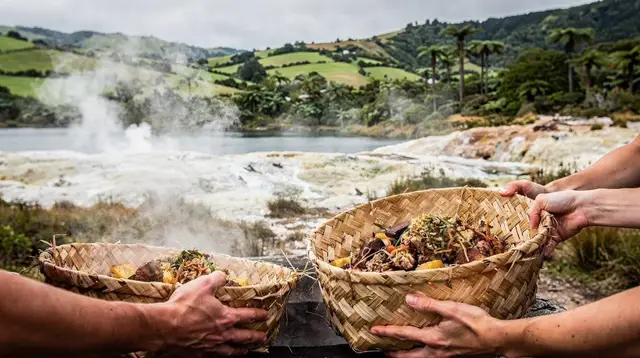
The opposite state is noa — unrestricted, everyday, free of that weight. A place, an object or a person can move between tapu and noa depending on context; a karakia (a blessing or incantation) is often what shifts something from one state to the other before a meal, a journey, or an event. You’ll hear karakia at the start of a hāngī, a pōwhiri (formal welcome), or a guided walk onto a maunga.
Family, tribe, gathering place
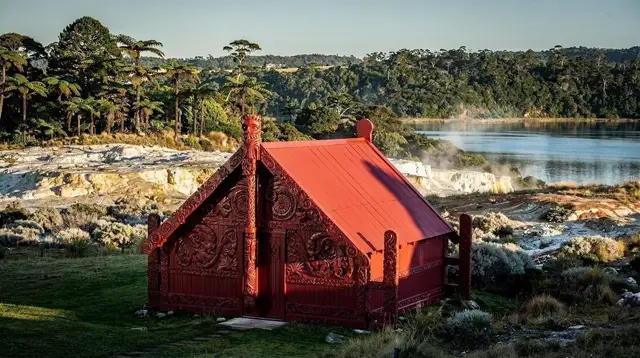
A cluster of words describes belonging. Iwi is the largest grouping, often translated as tribe or nation — Te Arawa is an iwi. Hapū is a smaller sub-tribe within it, and whānau is family, in the extended sense that includes people who aren’t blood relatives but are treated as such. Marae is the complex of buildings — usually a carved wharenui (meeting house) facing a courtyard — where a hapū or iwi gathers for formal occasions, funerals, and welcomes. Ōhinemutu, right in the middle of Rotorua, is a working marae village where people live day to day, not a reconstruction.
Two more worth knowing: manaakitanga, the ethic of hospitality and care for guests that shapes how welcomes and hāngī are run, and mana, a word with no clean English equivalent — something like standing, authority, or prestige, held by a person, an object, or a place. A taonga (a treasured object — carving, cloak, greenstone) carries mana. So does a maunga.
Reading the macron
The line over a vowel — ā, ē, ī, ō, ū — is a macron, and it isn’t optional styling. It means you hold that vowel roughly twice as long. Māori is not the same word as “Maori” said quickly; the ā is a longer, more open sound. Get this wrong and you’re not just mispronouncing — in a few cases you’re saying a different word entirely.
It’s also why some names around here carry macrons and others don’t. Taupō, Whakatāne, Ōhope, Tūrangi and Pōhutu all take the macron. Rotorua, Tarawera, Waimangu, Kaituna and Whakarewarewa don’t — their vowels are already short in the original. There’s no shortcut except checking each name, but the pattern to remember is simple: the macron changes the sound, not the meaning of the letter, and dropping it isn’t a small thing to the people whose language it is.
A rough guide to vowels: a as in “car,” e as in “egg,” i as in “see,” o as in “or,” u as in “moon.” Stretch any of them under a macron. Wh is usually said close to an English “f” (Whakarewarewa, roughly “fah-ka-reh-wa-reh-wa”), and ng is one soft sound, like the end of “sing” (Ngongotahā, Rotokākahi’s — no, that one has no ng, but Ngāti does).
A short list I actually use
| Word | Rough meaning |
|---|---|
| Kia ora | Hello / thanks / life, health |
| Whenua | Land |
| Awa | River |
| Roto | Lake |
| Wai | Water |
| Tapu | Sacred, restricted |
| Noa | Unrestricted, ordinary |
| Maunga | Mountain |
| Iwi | Tribe, nation |
| Hapū | Sub-tribe |
| Whānau | Family |
| Marae | Meeting grounds |
| Wharenui | Meeting house |
| Manaakitanga | Hospitality, care for guests |
| Mana | Standing, authority, prestige |
| Taonga | Treasure |
| Karakia | Blessing, incantation |
| Pōwhiri | Formal welcome |
| Haka | Ceremonial performance |
| Hāngī | Earth oven, or the meal from it |
| Kai | Food |
| Koha | Gift, donation |
| Tangata whenua | People of the land |
| Whakapapa | Genealogy, lineage |
| Tiaki | To care for, guard |
| Kaitiakitanga | Guardianship of land and resources |
| Rāhui | Temporary restriction (fishing, access) |
| Aroha | Love, compassion |
| Waka | Canoe |
| Aotearoa | New Zealand |
I picked up most of these not from a phrasebook but from a guided walk at the Buried Village of Te Wairoa, where our guide explained why the site is named that way, and from an afternoon on an eco thermal walk through the geothermal valley where every stop had a name worth asking about. If you want the history behind why some of these words matter so much around Tarawera specifically, the story of the 1886 eruption is where it starts.
Where the words come alive
You don’t need to memorise any of this before arriving — you’ll absorb most of it just by paying attention to signage, guides and place names over a few days. But it does change a visit. Standing at Wai-O-Tapu, knowing that “wai” is water and “tapu” is restricted, the name itself becomes a small warning label about the ground you’re walking on. Hearing a karakia before a tour through the geothermal valleys south of the city lands differently once you know it’s shifting the space from tapu to noa, not just a formality.
If your itinerary also runs out to Matamata, none of this vocabulary carries over — Hobbiton is built on English fantasy place names, not te reo, and the day trip out to the Hobbiton film set is a different kind of afternoon entirely. For deeper background on how to behave respectfully around marae, hāngī and cultural performances, I’d read the cultural etiquette guide and the piece on what a hāngī actually is before you go. And if you want the full story on why the haka isn’t only a war dance, that’s covered separately too — see what the haka means.
None of these thirty words will make you fluent. But they’ll make the signs, the welcomes, and the map make sense — and in a place built this thoroughly around Te Arawa history and language, that’s most of what a short visit can reasonably ask for. For the mechanics of pronunciation across the wider region’s place names, there’s a longer piece on how to say New Zealand place names worth a look before you set out.
Māori words for travellers in Rotorua: FAQ
What does “kia ora” actually mean?
Literally it relates to “ora,” meaning life or health, so it’s closer to “be well.” In everyday use around Rotorua it functions as hello, thank you, and sometimes goodbye, depending on context and tone.
Why do some Māori words have a macron and others don’t?
The macron marks a long vowel sound in that specific word. Whether a name carries one depends on its original pronunciation, not on any general rule — Taupō and Pōhutu take one, while Rotorua and Tarawera don’t, because their vowels were already short.
Is Rotorua meant to have a macron?
No. Rotorua is written and pronounced without a macron on any vowel, unlike nearby Taupō or Whakatāne.
What does tapu mean, and why does it matter for visitors?
Tapu means sacred or restricted — a state requiring care rather than casual use. Lake Rotokākahi near Tarawera is tapu and closed to swimming and boating; respecting that, even without a fence, matters to the people it belongs to.
What’s the difference between whenua and papa?
Whenua is land in general, including in the sense of ancestral, belonged-to land. Papa more specifically refers to the earth or ground itself, as in Papatūānuku, the earth mother in Māori tradition. In everyday travel use, whenua is the word you’ll meet far more often.
How do I pronounce Māori vowels correctly?
Five vowel sounds, always consistent: a as in “car,” e as in “egg,” i as in “see,” o as in “or,” u as in “moon.” A macron over any of them means holding that sound longer, not changing it.
Is it rude to mispronounce Māori place names?
Nobody expects perfect pronunciation from a visitor, and guides and locals are generally patient with genuine attempts. What tends to land badly is not trying at all, or joking about the language — a reasonable effort at names like Whakarewarewa is noticed and appreciated.
Where will I hear the most te reo Māori around Rotorua?
At guided cultural experiences, marae visits, hāngī dinners, and in everyday greetings around town. Ōhinemutu village and Te Puia are two of the places where the language is most present in daily life rather than only in performance.
Māori culture & heritage tours on GetYourGuide
Verified deep-linked GetYourGuide tours. Book through these links and we earn a small commission at no cost to you.
Photos show the destination, not the operator's own images.