What to Pack for Rotorua
I packed for Rotorua the way I’d pack for anywhere with a mild reputation: a jacket, a pair of jeans, sandals for “the geothermal stuff.” By the second day I’d bought a beanie at a petrol station and thrown a swimsuit in the wash for the third time. Nobody had told me that a single day here can run from frost on the windscreen to sweating through a t-shirt to standing in freezing rain, sometimes before lunch. This is the list I’d actually hand a friend, built from getting it wrong first.
Why a normal packing list doesn’t work here
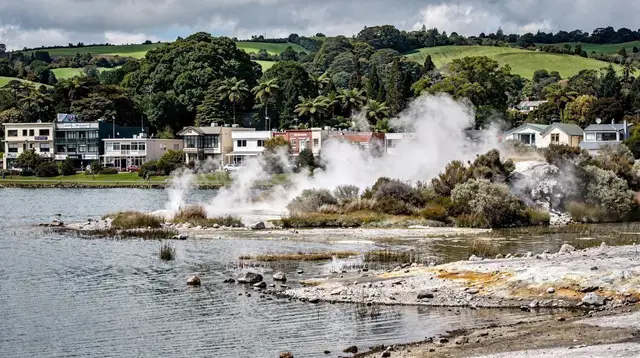
Most packing advice assumes one climate per day. Rotorua sits inland at modest elevation, which means mornings can be genuinely cold even in summer, afternoons warm up fast, and rain can appear from nowhere and vanish just as quickly. Add the geothermal factor — steam drifting across footpaths, sulphur in the air, ground that’s sometimes warm underfoot — and you’re dressing for weather and for terrain at the same time. I stopped checking a single forecast number and started packing for a range.
The other thing nobody mentions: this is a full year-round destination. There’s no shoulder season where you can relax the layering rule. Whether you land in summer or winter, the same four-seasons-in-a-day pattern shows up, just shifted a few degrees either way.
Layers, because you will use every single one
The system that worked for me: a moisture-wicking base layer, a light mid layer (a fleece or a merino jumper), and a genuinely waterproof outer shell — not water-resistant, waterproof, with a hood. Rotorua gets rain on a large share of days across the whole year, so this isn’t a spare-tyre item, it’s daily wear. I also packed one pair of proper trousers I could layer thermals under, because the walking tracks in the Redwoods forest or around Okere Falls are shadier and colder than the open geothermal parks like Wai-O-Tapu.
Closed shoes matter more than I expected. Boardwalks at the thermal parks can be uneven, and if you’re doing anything on the walking tracks or considering a day out on Mount Tarawera, sandals just don’t hold up. I wore trail runners the whole trip and never once wished for anything else.
The UV number nobody warns you about
This is the one that actually surprised me. New Zealand sits under a thinner ozone layer than the northern hemisphere at equivalent latitudes, and the UV index here climbs to levels that would count as extreme almost anywhere else. I got burned on an overcast afternoon within about forty minutes, which had never happened to me before. A hat, sunglasses, and proper SPF are not optional extras — I now treat them the same as a passport, something I check for before leaving the room, whatever the sky looks like. This holds even on the [luxury spa side of a day out](a Māori world tour built around a full spa package), where you’re outdoors between pools more than you’d think.
The swimsuit problem
Rotorua will ruin a swimsuit, and I mean that literally. Between the free hot springs, the mineral-heavy pools at places like Wai-O-Tapu, and any mud experience at Hell’s Gate, you’re dealing with sulphur and silica that can discolour or degrade fabric fast. I brought a swimsuit I actually liked on day one and by day four it had a faint grey tinge that never washed out. Bring an old one you won’t mourn, and pack a separate plastic bag for it afterwards — you do not want sulphur-and-mud-soaked fabric sitting against your other clothes in a suitcase.
If mud is part of the plan, an afternoon spent moving between thermal pools and mud baths is worth building the day around rather than squeezing in. And for a day trip further out to the volcanic valleys, a guided boat and walking tour through Wai-O-Tapu and Waimangu covers ground you’d struggle to plan solo — and still leaves you needing that spare swimsuit if you tack on a soak afterward.
What actually went in my bag
| Category | What worked | Why |
|---|---|---|
| Outer layer | Waterproof shell with a hood | Rain is a year-round possibility, not a season |
| Mid layer | Fleece or merino jumper | Mornings and evenings run cold in every season |
| Footwear | Closed trail shoes | Boardwalks, forest tracks, uneven ground |
| Sun protection | Wide-brim hat, sunglasses, high-SPF sunscreen | UV levels are genuinely extreme, even under cloud |
| Swimwear | An old suit you don’t mind staining | Sulphur and mineral water discolour fabric |
| Extras | A sealable plastic bag, a small towel | For a mud- or sulphur-soaked swimsuit after a soak |
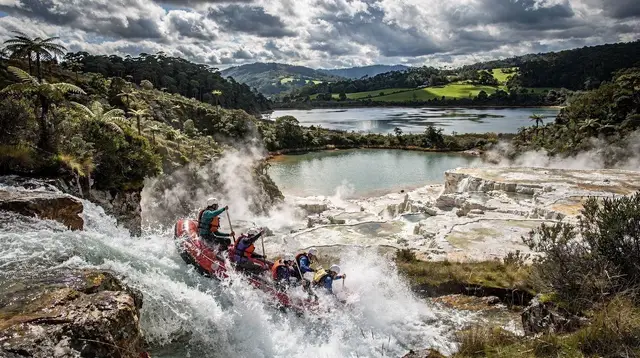
If a wetter, muddier day is on the itinerary — the kind that combines a zip line with rafting — pack a full dry change for afterwards. A combined zip line and rafting outing that ends with a free sauna means you’ll be properly wet at some point and glad of a hot shower and dry clothes waiting in the car.
What I left at home and didn’t miss
I over-packed dressy clothes for evenings out and barely touched them; Rotorua is a casual, outdoors-first town. I also brought an umbrella that spent the whole trip in the boot — in wind and steam it’s useless compared to a hood. And I didn’t need heavy hiking boots unless the Tongariro Alpine Crossing was actually on the itinerary; for the geothermal parks and forest walks, trail runners were plenty.
Packing for Rotorua, answered
Do I need a raincoat even in summer?
Yes. Rain falls across the whole year here, not in a defined wet season, so a genuinely waterproof jacket is worth packing whatever month you’re visiting, alongside checking seasonal weather patterns before you go.
Is the UV really that strong?
Yes, and it’s one of the more surprising practical facts for first-time visitors. The UV index reaches extreme levels even under cloud, so sunscreen and a hat are daily items, not just beach-day items.
Will my swimsuit actually get ruined?
Mineral-rich hot pools and mud can discolour or degrade fabric over repeated use. Bring a suit you’re not attached to if you plan on soaking more than once, and keep a sealed bag for it afterwards.
What shoes should I bring?
Closed, comfortable walking shoes cover almost everything — thermal park boardwalks, forest tracks, and town walking. Save specialist hiking boots for a dedicated alpine walk.
Do I need warm clothes in summer?
Yes, at least for mornings and evenings. Even in the warmer months, temperatures can drop enough overnight that a fleece or jumper earns its space in the bag.
Should I pack differently for a mud or thermal experience?
Plan a full change of clothes and a plastic bag for wet or muddy items, and treat the hot pools and mud pools as separate from your regular sightseeing outfit.
Is one packing list enough for a longer North Island trip?
Mostly, yes — the same layering logic holds if you’re extending toward Taupō or the Bay of Plenty, though pack for altitude if Tongariro National Park is part of the plan.
Trip-planning essentials on GetYourGuide
Verified deep-linked GetYourGuide tours. Book through these links and we earn a small commission at no cost to you.
Photos show the destination, not the operator's own images.