Rotorua in Summer: Warm Lakes, Long Days and Booking Ahead
What is Rotorua like in summer?
December to February brings daytime highs around 23–24°C, days stretching to roughly 15 hours of light, and lake water warm enough to swim comfortably. It's also the one period of the year when Hobbiton and other popular tours can sell out, so booking ahead matters more than usual.
What December to February Actually Changes
New Zealand’s seasons run opposite to the northern hemisphere, so summer here means December, January and February — and Christmas falls in the middle of it. In Rotorua that translates into daytime highs typically around 23–24°C, days stretching to roughly 15 hours of light, and lake water finally warm enough to swim in without flinching. It’s the one stretch of the year when the geothermal parks, the lakes, and the long-light adventure activities all line up at once. See best time to visit Rotorua for how summer compares to the other three seasons, and Rotorua weather month by month for the finer detail within summer itself.
What doesn’t change is the rain. Rotorua has no dry season — roughly 140 rain days fall across the year — so a warm forecast in January is not a promise of a rain-free one. Pack for both. What does shift meaningfully is daylight: sunrise well before 6am and sunset past 8:30pm through the core of summer means a single day can comfortably hold a geothermal park in the morning, a lake swim at midday, and a Redwoods walk before dinner, all without a headlamp.
Swimmable Lakes: Which Ones Actually Warm Up
Rotorua sits among a cluster of volcanic lakes, and summer is when the distinction between them matters most for anyone planning to swim rather than just look. Tikitapu (Blue Lake) is the standard choice — clear, shallow enough at the edges to wade in gradually, and reliably warm through summer, with water reaching around 20°C. Lake Tarawera, larger and framed by the mountain of the same name, warms similarly and adds boat access to quieter bays. Its neighbour, Rotokākahi (Green Lake), is tapu and off-limits — admired from the road, not entered.
Lake Rotoiti also gets summer use, including sections only reachable by water where hot springs meet the lake edge. Lake Rotorua itself is swum too, though be aware some warmth near the shoreline comes from geothermal seepage rather than the sun, which is a different (and sometimes hotter) sensation than a normal lake edge. For a fuller rundown of each lake’s character, see Lake Rotorua, Lake Tarawera and the Blue and Green Lakes. Kayaking is a good way to cover more than one in a day — see kayaking the Rotorua lakes and lake cruises and kayaking on Lake Rotorua.
Hobbiton: The One Booking That Tightens Up
Across most of the year, Hobbiton in nearby Matamata runs enough tour departures that a booking made a few days out is usually fine. Summer is the exception. December and January stack New Zealand’s own school holidays on top of peak international arrivals and Bay of Plenty cruise ship calls that route day visitors through the region — and Hobbiton is the single most in-demand stop for all three groups at once. Preferred time slots sell out, and on the busiest days the whole day can fill.
The practical fix is simple: if a specific date or time matters, book it before you arrive in New Zealand rather than once you’re in Rotorua. The complete Hobbiton guide covers what a visit involves, and getting from Rotorua to Hobbiton covers the roughly 50-minute drive or organised transfer options. Outside summer, the same site is far more forgiving of a spontaneous plan.
Geothermal Parks in Summer Heat
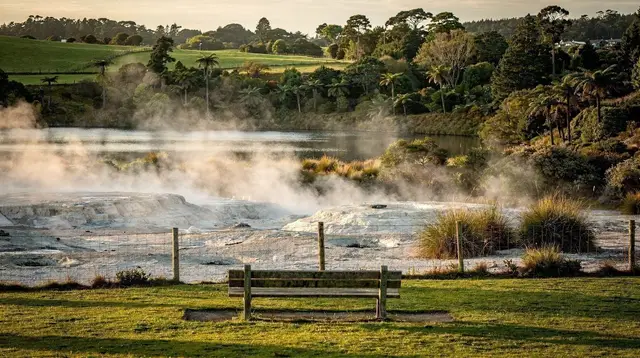
The vapour that makes Wai-O-Tapu, Te Puia and Whakarewarewa visually dramatic actually shows up better in cold air — a winter morning at Whakarewarewa produces thicker, more visible steam than a warm January afternoon, simply because steam condenses more against cold surrounding air. That doesn’t make the parks less worth visiting in summer; Champagne Pool’s colour, the Lady Knox eruption at Wai-O-Tapu, and Pōhutu’s regular jets at Whakarewarewa are unaffected by season. It just means summer visitors sometimes arrive expecting more visible steam than the warm air delivers.
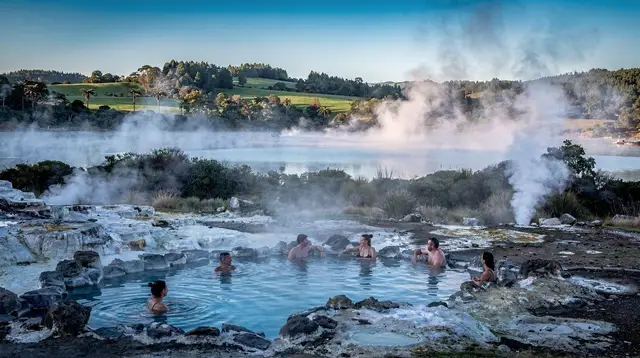
What summer does add is heat management. Wai-O-Tapu’s walking loop and Te Puia’s grounds involve real time outdoors on exposed paths with little shade, and midday sun combined with New Zealand’s extreme summer UV index makes an early or late visit noticeably more comfortable than a midday one. Booking an afternoon slot after the heat peaks, or a shaded, guided route, is worth planning for — a walking-and-thermal combination like this afternoon walk through Rotorua’s geothermal landscape times the outdoor stretch away from the hottest hours.
For choosing between the parks themselves, which geothermal park to choose and the Wai-O-Tapu visiting guide go into more detail, and why Rotorua smells of sulphur explains the hydrogen sulphide behind the smell that’s constant regardless of season.
Sun and Water: The Two Real Risks
New Zealand’s summer UV index runs into the extreme range, and it’s a genuine planning consideration rather than a formality — the country’s UV exposure at this latitude and altitude is measurably higher than equivalent summer conditions in much of Europe or North America. A hat, sunglasses, sunscreen reapplied through the day, and a preference for shade in the early afternoon are not optional extras here.
The other summer-specific consideration is water. Warmer lakes bring more swimmers, boaters and kayakers onto the same stretches of water, and currents at spots like Okere Falls on the Kaituna River are unrelated to how warm the water feels — that river carries real force year-round. If rafting or sledging appeals, go with an operator rather than improvising: see Kaituna River rafting and choosing which river to raft near Rotorua. A combination outing like this zipline and rafting day with a sauna to finish pairs the water time with tree canopy activity, which suits the long summer daylight well.
What the Long Days Make Possible
Fifteen hours of daylight changes the arithmetic on day trips. A Taupō day trip that feels rushed in winter’s shorter light — driving down, seeing Huka Falls, walking part of Craters of the Moon, driving back — has real breathing room in summer. See Rotorua to Taupō day trip and Lake Taupō for what that day can include.
The Tongariro Alpine Crossing benefits even more directly: at 19.4km and six to eight hours, it needs an early start regardless of season, but summer’s longer light gives more margin if weather or pace runs behind schedule. Alpine weather changes fast at any time of year, so treat the Tongariro Alpine Crossing from Rotorua guide’s timing advice as a floor, not a target.
Closer to town, the extra light means the Redwoods Treewalk and its night-lit version both work well in summer — daylight walking stretches later into the evening, and the night walk itself simply starts later without losing its atmosphere. Mountain biking in the Redwoods and the free walking tracks around Rotorua are both easier to fit into a relaxed itinerary when the sun isn’t setting at 5:30pm.
Evening light also suits slower, scenic activities — a summer evening horse trek through Rotorua’s countryside or, for a cultural evening that starts later without running into darkness, an experience like the Te Puia visit paired with a cultural evening and hāngī both make better use of the extended daylight than they would in a shorter-day month.
Peak Season, Peak Crowds
Summer is Rotorua’s busiest period, for reasons that stack rather than a single cause: New Zealand’s own school summer holidays run through most of it, it captures the bulk of international leisure travel timed around the northern hemisphere’s winter break, and it overlaps with the Bay of Plenty cruise season that brings ship-day visitors through Tauranga and into Rotorua for the day — see a cruise ship day in Rotorua from Tauranga. The combined effect shows up most at Hobbiton, at the more popular geothermal parks around midday, and in accommodation availability generally.
None of this makes Rotorua feel overrun the way a genuinely mass-tourism destination does — is Rotorua touristy covers that question directly — but summer is measurably busier and pricier than the shoulder months. If a quieter, cheaper version of the same sights appeals more than warm lakes, Rotorua in winter is the direct comparison, with the steam more visible and the crowds thinner in exchange for shorter days and cooler air.
Costs in a Summer Trip
Rotorua doesn’t publish season-specific rate cards, but summer demand pushes actual spend toward the higher end of the usual bands. As a rough per-person, per-day guide across styles of trip:
| Style | Typical daily spend (NZD) | What summer changes |
|---|---|---|
| Budget / backpacker | ~150 | Hostel and campervan sites fill faster; book ahead |
| Mid-range | ~350 | Restaurant and tour demand higher than shoulder season |
| High-end | ~700 | Premium accommodation sells out first |
These are the same broad bands that apply year-round — the difference in summer is availability rather than the bands themselves shifting. See Rotorua on a budget for concrete ways to keep costs down even in peak season, and where to stay in Rotorua for booking-ahead advice specific to summer.
Packing for a Rotorua Summer
Sun protection tops the list, given how far the UV index climbs in summer at this latitude. Beyond that: swimwear for the lakes, a light rain layer since no month here is reliably dry, sturdy shoes for walking tracks, and at least one warmer layer for evenings that cool down faster than a 23°C day suggests they will. If a family trip is on the table, Rotorua with kids covers which activities suit a summer visit with children specifically, and Rotorua’s 3-day itinerary is a reasonable starting frame to adjust around the long daylight hours summer provides.
Frequently Asked Questions About Rotorua in Summer
Is Rotorua worth visiting in summer?
Yes — it’s the easiest season for swimming in the lakes, walking the Redwoods without a headlamp until early evening, and fitting a full day trip to Taupō or Waitomo into the daylight you have. The trade-off is that it’s also the busiest and priciest season, so popular tours and accommodation need earlier booking.
How hot does it get in Rotorua in summer?
Daytime highs typically sit around 23–24°C, with warmer spells possible. Nights cool down noticeably, so evenings still call for a light layer even after a warm day. Rain falls year-round, so a warm forecast is not a guarantee of a dry one.
Do I need to book Hobbiton in advance in summer?
It’s the one booking that genuinely tightens up in December and January, when cruise ship days, school holidays and peak international travel overlap. Outside summer, walk-up or short-notice bookings are far more realistic; in summer, book your slot before you land in New Zealand if the date matters to you.
Which lakes are warm enough to swim in during summer?
Tikitapu (Blue Lake) and Lake Tarawera are the two most reliably warm and clear for summer swimming, with water reaching around 20°C. Lake Rotoiti and parts of Lake Rotorua are also swum in summer, though Lake Rotorua has geothermally warmed patches near shore that are separate from general lake temperature.
Is Rotorua busier in summer than winter?
Noticeably. Summer overlaps with New Zealand’s own school holidays and the bulk of international travel, plus Bay of Plenty cruise ship calls that route day visitors through Rotorua. Winter is quieter and cheaper for the same geothermal parks and cultural experiences, just colder and with earlier darkness.
Do the geothermal parks smell worse in summer heat?
The sulphur smell from hydrogen sulphide is present year round and doesn’t intensify with heat — if anything, the visible steam plumes are less dramatic in warm air than on a cold winter morning, since steam shows up more clearly against cold air. The colours in pools like Champagne Pool are unaffected by season.
What should I pack for a Rotorua summer trip?
Sun protection is the non-negotiable one — hat, sunglasses and sunscreen for a UV index that reaches extreme levels in summer — alongside swimwear for the lakes and a light rain layer, since Rotorua has no dry season. Layers for cooler evenings round it out.
Seasonal experiences on GetYourGuide
Verified deep-linked GetYourGuide tours. Book through these links and we earn a small commission at no cost to you.
Photos show the destination, not the operator's own images.