Solo Travel in Rotorua: Activities, Hostels, and Single Supplements
Is Rotorua a good destination for solo travellers?
Yes. Rotorua's geothermal parks, cultural experiences, and adventure activities are mostly sold as shared group tours with no partner needed, and the compact town centre makes it walkable without a car. A well-connected hostel scene and small-group operators make it one of the easier North Island bases to visit alone.
Why Rotorua Works for a Solo Trip
Rotorua sits on a compact, walkable town centre wrapped around a lake, which already removes one of the main frictions of travelling alone: getting stranded without transport in the evening. Most of the geothermal parks, cultural sites, and adventure operators sell tickets and tours per person, not per room or per couple, because a bus or a walking group is shared infrastructure regardless of who books it. That makes the destination naturally solo-friendly rather than solo-tolerant.
The town also has a long-standing backpacker circuit, a byproduct of being the country’s most visited destination since the 1880s and a fixture on the classic North Island route. That means hostels, shuttle operators, and day-tour companies are built around picking up individual travellers, not just groups who already know each other.
None of this means solo travel here is risk-free or effortless. The city sits inside the Taupō Volcanic Zone, so ground stability and water temperature in thermal areas are real hazards that deserve attention regardless of who you’re travelling with — see Rotorua Safety: Geothermal Areas before your first park visit. What follows is what actually changes, and what doesn’t, when there’s no travel partner splitting the bill or watching your bag.
Activities That Don’t Need a Second Person
A lot of Rotorua’s signature experiences are built for individual entry, which removes the usual solo-travel tax of activities priced or designed around pairs.
Geothermal parks. Wai-O-Tapu, Te Puia, Whakarewarewa Village, and Waimangu are self-paced walking circuits with marked paths and posted timings (Wai-O-Tapu’s Lady Knox Geyser show, for instance, runs on a fixed morning schedule regardless of group size). A solo visitor buys one ticket and walks the same loop as everyone else. For choosing between them, see Rotorua’s Geothermal Parks: Which One to Choose and Wai-O-Tapu Visiting Guide.
Cultural experiences. A hāngī and cultural performance evening seats guests at shared tables by design, which works in a solo traveller’s favour rather than against it — you’re placed with other visitors rather than isolated at a table for one. Compare formats in Te Puia vs Whakarewarewa Village and Māori Cultural Experiences Compared. A guided half-day covering thermal terrain and a cultural welcome together, such as the Eco Thermal Afternoon Tour, removes the logistics of stringing sites together on your own.
Hot pools. Soaking is inherently a solo-compatible activity — nobody needs a companion to sit in warm mineral water. The Polynesian Spa’s public pools and the free bush-set pools both work alone; see Polynesian Spa: What to Know and Free Hot Springs Around Rotorua for the difference between paid and free options.
Mountain biking and walking. The Redwoods forest has waymarked trails for both, and riders and walkers alike move through it independently of group size — see Mountain Biking in the Redwoods and Rotorua’s Free Walking Tracks. The canopy walkway at Redwoods Treewalk: Day or Night is ticketed per person and just as workable solo at night as with company.
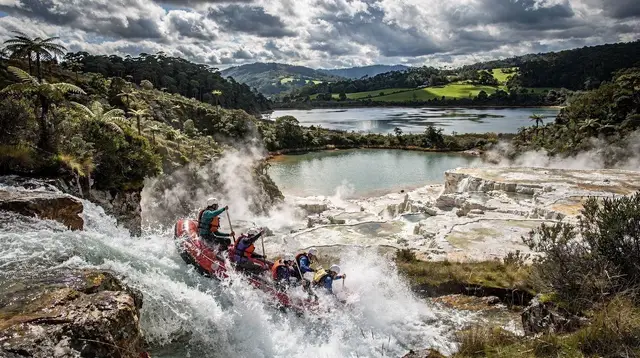
Adventure activities. Zip-lining and river-based activities are typically run as small groups of paying guests assembled by the operator, so arriving alone simply means joining whoever else booked that slot. A combination such as the Ziplines and Rafting Combo with Free Sauna pools solo travellers into one group by default — see Rotorua’s Adventure Activities, Ranked for how the options compare.
A horse trek through farmland or forest is another activity where the group is assembled by the operator rather than by the traveller, making the Scenic Horse Trek a straightforward solo booking rather than something that assumes a pair.
Guided Tours vs Self-Drive When You’re Alone
Rotorua’s outlying sights — Wai-O-Tapu around 27 kilometres south, Waimangu a similar distance, Hell’s Gate northeast on State Highway 30 — are spread widely enough that reaching several in one day without a car or a tour is difficult. Travelling solo changes the maths on renting a car versus booking a shuttle or guided day, mostly because the fixed costs of a rental (the car itself, insurance, parking) are no longer split between two or more people.
A guided day that bundles several sites, like the Rotorua Wai-O-Tapu Te Puia with Haka tour, often works out close to or cheaper than a solo car rental once fuel and parking are added, and it removes the need to navigate an unfamiliar road network alone. The trade-off is a fixed schedule rather than the flexibility of your own vehicle. For a fuller comparison of when each approach makes sense, see Guided Tours vs Self-Drive and Driving in New Zealand for Visitors if you do decide to rent.
Inside town, Getting Around Rotorua Without a Car covers the local shuttle and walking options that cover the town-centre sights without needing wheels at all.
Where Solo Travellers Stay
Backpacker hostels are the backbone of solo accommodation in Rotorua, concentrated around the town centre and within walking distance of the lakefront. Most offer a mix of dorm beds and private single or twin rooms, plus communal kitchens and lounges — useful not just for saving on meals but as the easiest way to find someone to split a tour or a taxi with. This is also where the single-supplement question mostly disappears: a dorm bed or a private single room is priced on its own, with no “per couple” baseline being divided.
Where the supplement resurfaces is in packaged deals — a multi-night stay bundled with a tour, or many mid-range and upmarket hotel rooms priced around double occupancy as the default. Read the fine print on anything described as a “package” rather than a straight room booking; a genuinely solo-priced room and a twin-share room marked up for single use can look identical in a listing. For a broader look at accommodation types across budgets, see Rotorua: Where to Stay and, if camping or a campervan is part of the plan, Rotorua’s Holiday Parks and Camping.
Rough daily budgets by travel style, per person:
| Style | Approx. daily budget | What it typically covers |
|---|---|---|
| Backpacker | ~150 NZD | Dorm bed, self-catered meals, one paid activity |
| Mid-range | ~350 NZD | Private room, mix of cafés and restaurants, one or two tours |
| Upmarket | ~700 NZD | Boutique or hotel stay, dining out, private or premium tours |
These are order-of-magnitude figures, not fixed prices — for a fuller cost breakdown see Rotorua on a Budget, and note that GST at 15% is already included in every price you’ll see quoted, so there’s no tax to add on top and no tip expected anywhere.
How Easy Is It to Meet Other Travellers?
Rotorua’s hostel scene is real but smaller and more transient than backpacker hubs like Queenstown or Auckland — many travellers pass through for one or two nights on a North Island loop rather than settling in for a week, so a lively common room on any given evening isn’t guaranteed. The more reliable way to meet people is through shared activities rather than waiting at the hostel: a half-day cultural tour, a geothermal park visit, or an adventure combo puts you alongside other solo travellers and small groups by default, and it’s common for people to swap plans for the following day over dinner afterward. Treat the tours themselves as the social infrastructure, and the hostel common room as a bonus rather than the main event. For how Rotorua compares as a solo base against the country’s other big backpacker hub, see Rotorua vs Queenstown: North vs South.
Safety Basics for Solo Visitors
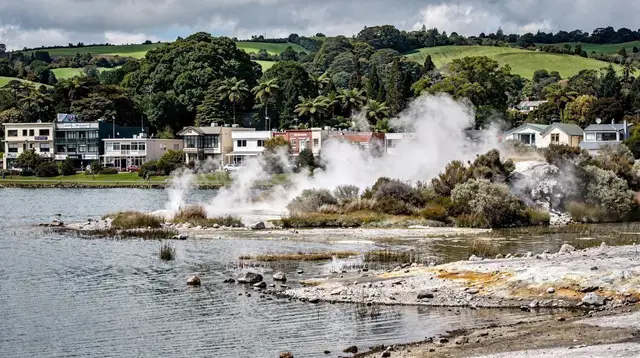
Rotorua’s core safety considerations are geothermal rather than social. Steam vents, hot ground, and boiling or near-boiling pools exist both inside ticketed parks and, less obviously, in public spaces like Kuirau Park — staying on marked paths and respecting barriers matters whether you’re alone or in a group, and matters more when there’s no one else to notice if something goes wrong. Rotorua Safety: Geothermal Areas covers this in detail and is worth reading before your first park visit.
Beyond that, ordinary travel sense applies: the town centre is generally low-key after dark, but a solo traveller in any unfamiliar city benefits from sticking to lit, populated streets at night and letting someone — a hostel, a booking confirmation, a family member — know a rough day plan when heading out to remote spots like Mount Tarawera or the forest trails alone. Tap water is safe to drink everywhere, which removes one common travel worry outright. Emergency services are reached on 111.
Solo travellers with mobility considerations should also note that the major geothermal parks vary in how much walking they involve — some circuits are longer boardwalk loops without shortcuts, which matters more when there’s no one to slow down for or lean on along the way. Rotorua’s Accessibility Guide covers surface types and distances for the main sights in more detail.
Sun exposure is a genuinely underrated risk here in summer, when the UV index reaches extreme levels even on a mild-feeling day — sunscreen and a hat matter more than they might in a similarly warm destination at higher latitude.
Single Supplements Worth Avoiding
The clearest way to lose money travelling solo in Rotorua is booking a package built around double occupancy without checking the per-person breakdown. A few patterns to watch for:
- Multi-night hotel packages that bundle accommodation with tours or meals at a per-couple rate, with the single rate buried or requiring a call to confirm. A straight room booking, priced per night regardless of occupancy, is usually more transparent.
- Private transfers billed as a flat fee per vehicle rather than per person — fine to split three or four ways, expensive alone. A shared shuttle or scheduled tour bus avoids this entirely.
- Twin-share multi-day guided trips (more relevant if extending beyond Rotorua to Tongariro or Waitomo) that default to a room-sharing rate and add a supplement for a private room. If solo travel is the whole trip, it’s worth confirming this before the deposit rather than after.
Day tours and single-activity bookings — the horse trek, the ziplines, the cultural half-day — are the safest bets precisely because they’re priced per seat or per guest from the outset, not per group.
One Full Day Alone: Guided Combo or Self-Paced Entry?
With only a single day in Rotorua, solo travellers face a real trade-off rather than an obvious right answer. A guided combination tour — such as the Eco Thermal Afternoon Tour already mentioned above — covers a geothermal site and a cultural welcome back to back, with transport, commentary, and pacing handled for you, which suits a traveller who wants broad coverage without spending the day working out logistics alone.
Buying a single entry ticket to one park and pairing it with a free option, such as a self-guided loop through the Redwoods forest, costs less and moves entirely at your own pace, but means seeing one thing well rather than several sites briefly. Neither choice is wrong: a first-time visitor with only one day tends to get more out of the guided combination, while someone extending their stay or returning to Rotorua is usually better served picking one site and lingering over it.
A Simple Solo Itinerary
For a traveller basing themselves in Rotorua without a rental car, a workable rhythm over a few days pairs one guided day (covering the sites hardest to reach independently) with self-paced days in town. How Many Days in Rotorua and Rotorua in 3 Days both lay out a fuller structure; solo travellers can follow the same shape and simply swap in shared tours wherever the itinerary assumes a car.
A half-day built around Te Puia — combining the geothermal valley, Pōhutu Geyser, and a cultural welcome, as in the Te Puia Māori Village and Rejuvenation Tour — is a solid single booking that covers a lot of ground without requiring any coordination beyond showing up.
Rotorua Solo Travel: Frequently Asked Questions
Is Rotorua safe for a solo traveller?
Rotorua is a small, walkable city and generally low-risk for solo visitors. The main practical hazards are geothermal, not criminal: stay on marked paths in thermal areas, since ground can be unstable and water can be near-boiling. Standard city-centre caution after dark applies as it would anywhere.
Do Rotorua tours charge a single supplement?
Most day tours and shared shuttles in Rotorua price per person with no single supplement, because the vehicle is already shared. Supplements mainly appear on private accommodation packages or multi-day guided trips that assume twin-share rooms — check that detail before booking anything bundled with lodging.
Can I do the geothermal parks and cultural sites alone?
Yes. Wai-O-Tapu, Te Puia, Whakarewarewa Village, and Waimangu are all self-guided or small-group experiences designed for individual entry, and a solo visitor moves through them exactly as a couple or family would.
Where do solo travellers stay in Rotorua?
Backpacker hostels near the town centre and the lakefront are the main solo base, offering private singles or dorm beds and communal kitchens or lounges where it’s easy to meet other travellers before booking a tour together.
Do I need a car to see Rotorua solo?
No for the town itself — geothermal parks close to Rotorua are reachable by shuttle or tour bus. A car or a tour becomes more useful for outlying sights like Wai-O-Tapu, Waimangu, or day trips to Taupō, since public transport options are limited.
Is it awkward to eat alone in Rotorua?
No — cafés and casual restaurants around the town centre and Eat Streat are used to solo diners, and a hāngī or cultural dinner show seats individual guests at shared tables, which suits solo travellers rather than working against them.
Is it easy to meet other travellers in Rotorua?
Easier through activities than through the hostel scene alone. Rotorua’s backpacker circuit is real but more transient than hubs like Queenstown, since many visitors pass through for only a night or two on a North Island loop. Booking shared tours — a cultural evening, a geothermal park visit, an adventure combo — puts solo travellers alongside each other by default and is a more reliable way to end up with dinner plans than waiting for a common room to fill up on any given night.
Is Rotorua a better solo base than Queenstown?
They suit different trip shapes rather than one being simply better. Rotorua’s shorter, ticketed geothermal and cultural experiences suit a solo traveller who wants a lot done in two or three days without heavy planning, while Queenstown’s larger backpacker and adventure-sport scene suits someone building an extended stay around one town on the South Island.
Trip-planning essentials on GetYourGuide
Verified deep-linked GetYourGuide tours. Book through these links and we earn a small commission at no cost to you.
Photos show the destination, not the operator's own images.