Rotorua Rainy Day Activities: What to Do When It Pours
What should you do in Rotorua when it rains?
Head to the geothermal parks first — steam and mist are more dramatic in the rain, and boardwalks handle wet weather fine. Beyond that, hot pools, indoor Māori cultural experiences, the museum, and covered attractions like the Redwoods Treewalk all work well on a wet day.
Rain Is Normal Here, Not an Exception
Rotorua gets rain on roughly 140 days a year. That figure is spread across every season, which means there is no dry month to plan a trip around and no wet month to avoid outright. If you are visiting for more than a couple of days, you will very likely see rain at some point, and treating that as a planning problem rather than bad luck makes the trip easier.
The good news is that Rotorua’s signature attraction — geothermal activity — does not depend on sunshine. If anything, the opposite is true. This guide covers why the geothermal parks often work better in wet weather, then runs through eight solid options for the days when rain settles in and does not let up. For a month-by-month breakdown of what to expect, see Rotorua Weather Month by Month.
Why Geothermal Parks Are Often Better in the Rain
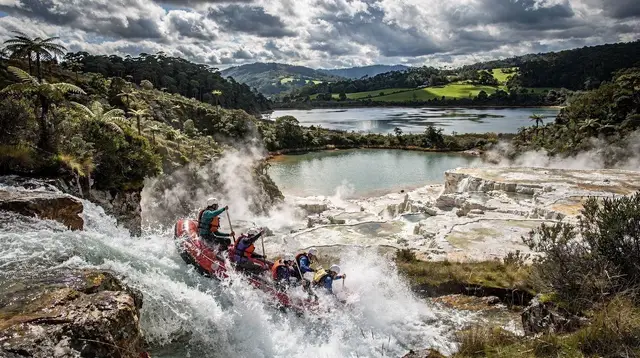
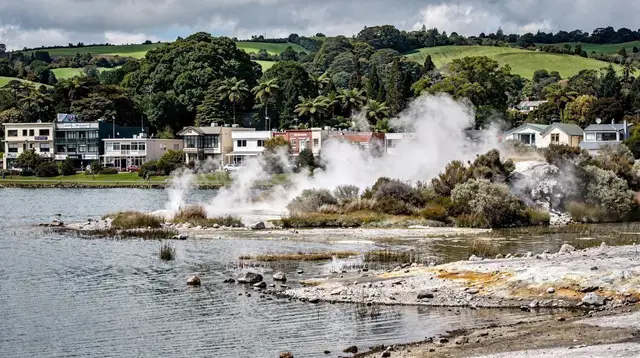
This is the part most visitors do not expect. Rotorua sits inside the Taupō Volcanic Zone, and its geysers, mud pools, and steaming ground are driven by heat rising from underground, not by weather at the surface. Rain does not switch any of that off.
What rain does change is how it looks. Steam and vapour show up more clearly against a grey sky and in cool, damp air than they do under bright sun, when a lot of it simply evaporates into the background. Photographs taken in light rain or mist at a geothermal park often look more atmospheric than the same shot on a clear day. Crowds also thin out noticeably when the forecast looks poor, which means shorter waits at boardwalk viewpoints and a quieter experience generally.
Practically, this covers the main geothermal sites well:
- Te Puia, inside the Whakarewarewa valley, where Pōhutu geyser erupts on its own schedule regardless of weather. See Te Puia vs Whakarewarewa Village: Which One Should You Visit for how it compares with the neighbouring living village.
- Wai-O-Tapu, about 27 kilometres south on State Highway 5, with the Champagne Pool and the Lady Knox geyser, which is triggered each morning rather than left to its own timing. Full detail in Wai-O-Tapu Visiting Guide: Hours, the Loop Walk and Lady Knox Timing.
- Waimangu Volcanic Valley, the only geothermal system in the world with a known birth date — the 1886 Tarawera eruption. It is walked downhill through a series of craters and lakes; see /destinations/waimangu-volcanic-valley/.
- Hell’s Gate, roughly 16 kilometres northeast on State Highway 30, the most active of the group and the only one where visitors enter a mud bath as part of the visit. Details at /destinations/hells-gate/.
For a side-by-side comparison of all of Rotorua’s geothermal parks and which one suits your day, start with Rotorua Geothermal Parks: Which One to Choose. One practical note: bring a hooded rain jacket rather than an umbrella. The boardwalks at these parks run close to hot ground, open craters, and narrow rails, and a handheld umbrella is awkward and occasionally unsafe in wind. If you’d rather have someone else handle logistics and pacing, a guided option covering the geothermal side and a bit of the surrounding area removes the guesswork on a wet day.
a small-group afternoon tour through Rotorua’s geothermal landscape runs on a set schedule and covers the walking routes without you needing to plan the order yourself.
Solution 2: Hot Pools and Mud Baths
If geothermal parks are the headline rainy-day activity, soaking in one of Rotorua’s hot pools is the natural follow-up. Sitting in warm mineral water while rain falls is, for a lot of visitors, one of the more memorable parts of a Rotorua trip rather than a consolation activity. Several pool complexes around town operate through the rain, and the contrast between warm water and cool, wet air is part of the appeal rather than a drawback.
Options range from developed spa facilities to free public hot springs. For the full rundown, including what to check before choosing one, see Rotorua Mud Baths and Mud Pools, Polynesian Spa: Priest and Rachel Pools, Deluxe vs Pavilion vs Family, and Free Hot Springs Around Rotorua: What’s Actually Free if you’d rather skip the entry fee. Bring a swimsuit and a change of dry clothes for afterward — the walk back to the car in wet hair on a rainy day is a lot less pleasant than the soak itself.
Solution 3: Indoor Māori Cultural Experiences
Rotorua is the heart of Te Arawa country, and its Māori cultural experiences are mostly built around covered, often indoor spaces — meeting houses, carving workshops, and performance venues — which makes them a reliable rainy-day choice. Te Puia combines the geothermal valley with the New Zealand Māori Arts and Crafts Institute, where carving and weaving are taught and practised under cover, and many visits are paired with a hāngī meal and an evening performance held indoors.
For background on what a hāngī actually is and where you can experience one, see Hāngī: What It Is and Where to Eat One in Rotorua. If you’re weighing which cultural experience fits your day, Rotorua Māori Cultural Evenings Compared covers the main options side by side, and Māori Cultural Etiquette in Rotorua: A Visitor’s Guide is worth reading beforehand regardless of which one you choose.
a combined visit to Te Puia covering the geothermal valley, arts and crafts institute, and cultural programme keeps most of the day under cover and pairs naturally with a hot pool stop afterward.
Solution 4: The Museum and Government Gardens
Rotorua Museum sits inside the 1908 Bath House building in the Government Gardens, and it covers the town’s volcanic history, the 1886 Tarawera eruption, and the century-long history of spa tourism here — useful context for everything else you’ll see around town. Note that parts of the Bath House have been closed for seismic strengthening since 2016 and have been reopening in stages, so check current access before visiting. See Rotorua Museum and the Government Gardens for what’s open now. The surrounding gardens are pleasant even in light rain if you want a short walk between indoor stops.
Solution 5: The Redwoods Treewalk
The Whakarewarewa Redwoods — a forest of California redwoods planted in 1901 — includes a canopy walkway strung between the trees, with a night-lit version running after dark. It is not a fully enclosed structure, so expect some drip through the canopy in rain, but a forest with a tall, dense canopy handles rain noticeably better than open ground, and the night walkway under light rain and mist has its own quiet appeal. Full detail at Redwoods Treewalk, Day or Night. The forest is also home to one of the best-regarded mountain bike trail networks in the world, though muddy trails after heavy rain are worth checking with a local bike shop before riding — see Mountain Biking Rotorua: The Redwoods Trail Network Explained.
Solution 6: Indoor Family and Adventure Activities
For a lower-key, weatherproof option, indoor mini golf and adventure centres around Rotorua work well for families or anyone wanting a change of pace from geothermal sightseeing. These venues run entirely undercover and don’t depend on the forecast at all.
an indoor mini golf course themed around Rotorua’s geothermal landscape is a straightforward, low-cost way to fill a couple of hours regardless of what’s happening outside. For more ideas along these lines, see Rotorua with Kids: The Family Itinerary That Actually Works and Rotorua Rainy Day Activities: What to Do When It Pours — sorry, you’re already here, so instead try Free Things to Do in Rotorua if budget is also a factor.
Solution 7: Waitomo Caves as a Planned Day Trip
If a full day of rain is forecast and you’re flexible on itinerary, the glowworm caves at Waitomo — about two hours’ drive from Rotorua — are underground and completely unaffected by surface weather. The caves are lit by Arachnocampa luminosa, a carnivorous glowworm larva found only in New Zealand, and several tour formats exist, from boat trips through the main cave system to adventure-based black water rafting. See Waitomo Glowworm Caves: Boat, Raft, or Abseil? for how to choose between them.
Because it’s a two-hour drive each way, this works best as a day planned in advance rather than a spontaneous decision once rain starts falling. If Waitomo isn’t in the plan, a shorter drive to Matamata for the Hobbiton Movie Set is another option — the site does move ahead in wet weather with ponchos and covered viewing points available, though rain does dull the photo opportunities somewhat.
a full-day private tour combining Hobbiton Movie Set with the Redwoods Treewalk covers both an indoor-friendly forest walk and a set-piece attraction in one booking, useful if you’d rather not drive yourself between them.
Solution 8: Food, Craft, and Slower-Paced Options
Not every rainy day needs to be an attraction-hopping schedule. Rotorua’s food scene, arts and crafts studios, and geothermally cooked meals are all indoor by nature and make for a relaxed way to spend a wet afternoon. For an overview of what’s distinctive about eating here — including the fact that trout cannot legally be sold in any New Zealand restaurant, only served if you caught it yourself — see Rotorua Food and Drink: Eat Streat, Hāngī, and Trout. Carving and weaving demonstrations, often included as part of a Te Puia visit, are covered in Māori Arts and Crafts in Rotorua: Carving, Weaving and Pounamu.
What to Skip When Rain Is Heavy
A few activities are genuinely weather-dependent and worth avoiding, or at least checking on, when rain is heavy rather than light:
| Activity | Why rain matters | What to do instead |
|---|---|---|
| Guided walks up Mount Tarawera | Exposed volcanic terrain, poor footing when wet | Reschedule with the operator, or visit an indoor cultural site instead |
| Lake kayaking or open-water paddling | Wind and reduced visibility on open water | Move to a hot pool or geothermal park for the day |
| Exposed lookouts and viewpoints | Little shelter, reduced visibility | Choose a forested or boardwalked site instead |
| Scenic flights | Grounded in poor visibility or high wind | Check with the operator; most simply reschedule rather than cancel outright |
None of this is unique to Rotorua — it’s the same logic that applies to outdoor activities anywhere. The advantage here is that so much of what makes Rotorua worth visiting (the geothermal parks, hot pools, and indoor cultural experiences) simply doesn’t care about rain in the first place.
Packing for Rotorua’s Rain
A proper rain jacket with a hood covers most situations here better than an umbrella, which is impractical on narrow geothermal boardwalks and in wind. Closed, waterproof shoes matter more than they might elsewhere, since several geothermal walkways and forest trails turn slick when wet. A dry change of clothes left in the car is worth it if you’re planning a hot pool stop, since walking back to a vehicle in wet clothes on a cool day is unpleasant regardless of season. Rotorua’s climate doesn’t have a dry season to dress around, so packing for rain is sensible at any time of year — see Rotorua Weather Month by Month for what to expect by season.
Rainy-Day Activities in Rotorua: Common Questions
Does rain ruin a visit to Rotorua’s geothermal parks?
No. Steam and vapour actually look more dramatic against grey skies and cool, damp air, and the main walkways at Te Puia, Wai-O-Tapu, and Waimangu are boardwalked and sealed. Bring a rain jacket rather than an umbrella, since the paths run close to hot ground and open craters.
How often does it rain in Rotorua?
Rotorua sees rain on roughly 140 days a year, spread across every season, so there is no reliable dry stretch to plan around. Most rain falls in short spells rather than as all-day downpours.
Are the hot pools open when it’s raining?
Yes, and many visitors prefer it that way. Soaking in warm mineral water while rain falls around you is one of the more distinctive things to do in Rotorua, and most pool complexes operate rain or shine.
What indoor activities are there in Rotorua besides museums?
Options include Te Puia’s covered cultural spaces and evening performances, the Rotorua Museum inside the historic Bath House, indoor mini golf, and indoor adventure centres with go-karts and simulators. Several tour operators also run their geothermal and cultural programmes as scheduled departures regardless of weather.
Should I still do the Redwoods Treewalk if it’s raining?
Yes, though expect some drip through the canopy since it is a forest, not a fully enclosed structure. The night version is particularly good in light rain, when the lit walkway sits under a fine mist and the forest sounds change.
Is it worth visiting Waitomo Caves on a rainy day from Rotorua?
It can be a good match, since the caves are underground and unaffected by surface weather. It is roughly a two-hour drive each way from Rotorua, so it works best as a planned day trip rather than a last-minute decision once rain starts.
What should I avoid doing in Rotorua when it’s raining heavily?
Skip exposed lookouts, guided walks up Mount Tarawera, and lake kayaking or open-water activities during heavy rain or high wind, since visibility and footing both suffer. Check with the operator first, as many trips are simply rescheduled rather than cancelled outright.
Do I need special gear for Rotorua’s rainy weather?
A proper rain jacket, closed shoes, and a dry layer for the car are enough for most days. Umbrellas are impractical on geothermal boardwalks and in wind, so a hood is more useful than a handheld umbrella.
Trip-planning essentials on GetYourGuide
Verified deep-linked GetYourGuide tours. Book through these links and we earn a small commission at no cost to you.
Photos show the destination, not the operator's own images.