Is Rotorua Touristy?
Is Rotorua touristy?
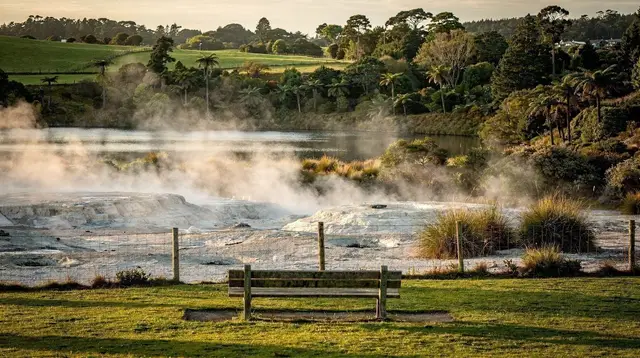
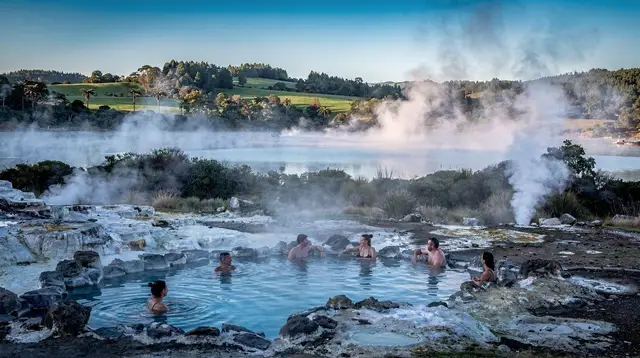
Yes — Rotorua has been New Zealand's leading tourist destination since the 1880s, and the geothermal parks and cultural venues around the lake are genuinely busy, especially midday and in peak summer. The crowding is concentrated in a handful of named sites; the wider region, including several lakes and walking tracks, sees very few visitors.
Yes, since the 1880s — here’s what that actually changes
Rotorua isn’t touristy in the sense of a destination that got discovered last decade and hasn’t caught up. It’s been the country’s leading tourist draw since the 1880s, when the first hotels went up around the geothermal terraces and steamers began bringing visitors up from Auckland. That’s roughly 140 years of continuous tourism infrastructure built around the same core assets: geysers, mud pools, hot pools, and a living Māori culture willing to host guests. The honest answer to “is it touristy” is simply yes — and the more useful question is what that looks like day to day, and where it doesn’t apply.
Long-run tourism has three concrete effects worth knowing before you arrive. First, the sites that made Rotorua famous — Whakarewarewa, Te Puia, Wai-O-Tapu — get busy, in a fairly predictable daily and seasonal rhythm. Second, decades of visitor numbers have paid for genuinely good infrastructure: boardwalks over active thermal ground, trained guides, road access to remote valleys, and cultural venues run by the people whose land and heritage this is, not by an outside operator. Third, the town itself has grown a full visitor economy — tour desks, rental car counters, dozens of activity operators — which means Rotorua is easy to organise a trip around even without a car, at the cost of feeling more commercial in the centre than a random North Island town of the same size.
None of that means Rotorua is a theme park. It’s a functioning regional centre of about 60,000 people sitting on an active caldera, where locals walk past steaming drains on the way to work and the smell of sulphur is just Tuesday. The tourism sits on top of a real place, not instead of one.
Where the crowds actually concentrate
Crowding in Rotorua isn’t evenly spread — it clusters around a short list of named sites, at predictable times.
| Where it happens | When | Why |
|---|---|---|
| Whakarewarewa and Te Puia | Late morning to mid-afternoon, daily | Both sell timed cultural performances and the reliable Pōhutu geyser draws a crowd around each eruption |
| Wai-O-Tapu | Just before 10:15 am | Everyone times their arrival around the Lady Knox geyser trigger |
| Rotorua town centre, Fenton Street area | Midday, and whenever a cruise ship is docked at Tauranga | Tour buses and shore-excursion groups cluster around the same short stretch of road |
| Skyline gondola and luge base station | School holidays, fine-weather afternoons | Family activity with limited capacity per gondola run |
| Redwoods forest main car park | Weekend mornings, summer evenings | Mountain bikers and the treewalk share one access point |
Outside these windows and locations, Rotorua thins out fast. A geothermal park at opening time, an hour before closing, or in the depths of winter behaves completely differently from the same park at 11 am in January. Guided tours booked for early or late slots — a walk through Wai-O-Tapu or a Te Puia visit outside the tour-bus block — routinely see a fraction of the midday crowd on the same boardwalks.
Does “touristy” mean the culture is staged?
It’s a fair worry, and worth answering directly: no, not here. The distinction is between a culture performed for visitors and one that’s simply visible to them. Ōhinemutu, a Ngāti Whakaue village inside the city with its own church and its own dead buried in front of it, isn’t run for tourists — visitors are welcome, quietly, on the community’s terms. Whakarewarewa is a residential village where families still use geothermal steam to cook their food; the guided visit is real income for real residents, not a re-enactment. Te Puia is New Zealand’s national training institute for carving and weaving — the craftspeople working there are training the next generation regardless of whether a tour group is watching.
That’s the throughline worth understanding before your trip: read Te Arawa history in Rotorua for the iwi context behind the sites you’ll visit, and Māori cultural etiquette in Rotorua for how to be a respectful guest rather than a spectator. A hāngī dinner or a haka performance sold as a ticketed evening is still a genuine cultural practice — it just happens to also be how some of that heritage is funded and kept alive. If you want a single well-run introduction that puts the geothermal and cultural sides together with a guide who can answer questions on both, a Te Puia visit combined with a Māori village experience covers that ground in one booking rather than three.
Where you actually find calm
The region around Rotorua is far bigger than its five or six famous sites, and most of it sees very few visitors at all.
- Lake Rotoiti — its hot springs are only reachable by boat, which on its own filters out anyone not specifically arranging water transport. Locals go here precisely because coach tours can’t.
- Hamurana Springs — a short drive from town, a clear spring-fed stream and a walking loop that rarely has more than a handful of people on it outside weekends.
- Kuirau Park — a free, public geothermal park inside the city, with its own mud pools and steaming lake, mostly used by locals rather than tour groups who’ve paid to see the same phenomena elsewhere.
- The Redwoods forest — busy right at the main car park and treewalk entrance, but the wider network of walking and mountain-biking trails absorbs crowds within a few hundred metres.
- Mount Tarawera — access is guided-only and limited by the iwi who own the mountain, which naturally caps numbers; nothing about a Tarawera visit feels crowded.
- Whirinaki Forest, inland from the main tourist corridor, is old-growth native bush with a fraction of Rotorua’s visitor traffic — a genuinely quiet alternative to the busier walking tracks closer to town, and one way to see it properly is a guided walk through Whirinaki with a local guide who knows the forest rather than just the trailhead.
For a full list of no-cost options in the quiet category, see free things to do in Rotorua and Rotorua’s free walking tracks.
A day that skips the crowd
If you only have limited time and want to see the headline sites without the headline crowds, sequencing matters more than which sites you pick. Book your geothermal park visit for opening time — Wai-O-Tapu and Waimangu both open before most tour buses arrive — and save the cultural venues for the early afternoon lull between the morning coach wave and the late-afternoon cruise-day rush, if a ship happens to be in at Tauranga that day. A well-paced three-day plan along these lines is laid out in Rotorua in 3 days, and if you’d rather not manage timing yourself, a combined outing like the Wai-O-Tapu and Te Puia day tour with a haka performance is built around exactly this kind of sequencing.
For an activity that’s inherently low-crowd because of how it’s structured — small groups, open countryside rather than a fixed boardwalk — a scenic horse trek or an eco thermal afternoon tour through less-visited geothermal ground both trade the geyser-adjacent crowd for a slower pace and a smaller group.
Touristy versus overtouristed — a real distinction
“Touristy” describes a place built around and reliant on visitors; “overtouristed” describes one where visitor numbers have started to damage the place or the experience of living there. Rotorua sits clearly in the first category and, on the whole, not in the second. The town’s economy has depended on tourism since the 19th century, which means the relationship between hosts and visitors is mature rather than strained — residents in Whakarewarewa and Ōhinemutu have generations of practice deciding what to share and what to keep private, and geothermal parks like Te Puia and Waimangu are managed with visitor capacity built into their design rather than as an afterthought.
That said, pressure points exist, mostly around parking, road congestion on cruise-ship days, and housing costs in a town that’s also a genuine place to live. Overtourism in Rotorua covers that side directly, and the Tiaki Promise — the visitor behaviour commitment asked of everyone entering the country — is a useful starting point for travelling in a way that doesn’t add to those pressures: sticking to marked paths on thermal ground, respecting tapu sites such as Lake Rotokākahi, which is off-limits entirely, and not treating a resident village as a photo backdrop.
How Rotorua compares
If you’re weighing Rotorua against other North Island bases, the touristy label is relative rather than absolute. Rotorua versus Taupō compares the two directly — Taupō is smaller and less thermal-park-dense, with a different, more lake-and-adventure-focused visitor pattern. Rotorua versus Queenstown covers the bigger comparison some travellers are actually making: Queenstown, on the South Island, is arguably more saturated relative to its size, built almost entirely around visitor spend, whereas Rotorua’s tourism sits on top of an older, more self-sufficient regional town. Neither comparison should factor into a North Island itinerary as if the two islands were interchangeable — they’re roughly 1,000 kilometres and a different landscape apart.
If you’re still deciding whether any of this changes your plans, best time to visit Rotorua breaks down how crowding shifts by season, and Rotorua: the honest verdict is a fuller stock-take of what the town does and doesn’t deliver, tourism levels included.
Rotorua’s tourist crowds: questions travelers ask
Is Rotorua overrun with tourists?
The town centre and the best-known geothermal parks can feel busy, particularly late morning through mid-afternoon and during summer and school holidays. Outside those windows, and away from the half-dozen headline sites, Rotorua is a working regional town of about 60,000 people, not a resort built purely for visitors.
Is Rotorua worth visiting if it’s touristy?
Yes. Being a long-established destination means the geothermal sites and Māori cultural venues have decades of infrastructure, boardwalks, and trained guides behind them, which is part of why they work well for visitors. Popularity and quality aren’t opposites here — Pōhutu geyser and Whakarewarewa have been operating for tourists since the 19th century precisely because they’re worth the visit.
What’s the least touristy time to visit Rotorua?
Winter (June to August) is quieter everywhere, with the added benefit that geothermal steam looks more dramatic in cold air. Outside winter, arriving at parks right at opening or in the last two hours before closing avoids the tour-bus middle of the day.
Are Whakarewarewa Village and Te Puia genuinely Māori-run, or just tourist attractions?
Both, without contradiction. Whakarewarewa is a living village where Tūhourangi Ngāti Wāhiao families still reside and cook using geothermal steam, and Te Puia is New Zealand’s national institute for Māori arts and crafts. They earn income from visitors, but the culture and the geothermal use predate tourism and continue regardless of it.
Where can I go in Rotorua to avoid crowds entirely?
Lake Rotoiti’s hot springs are boat-access only, which filters out coach traffic on its own. Kuirau Park is a free public geothermal park most visitors skip in favour of paid sites, and the walking tracks through the Redwoods forest thin out fast once you’re a few hundred metres past the main car park.
Is Rotorua more touristy than Taupō or Queenstown?
Rotorua has a longer tourism history than either — it was the country’s top destination decades before Queenstown’s ski and adventure industry took off. Queenstown’s town centre is arguably denser with visitors relative to its size; Rotorua’s tourist activity is more spread across named sites than concentrated in the town itself.
Does cruise ship traffic from Tauranga make Rotorua more crowded?
Yes, on days a large ship is in port at Tauranga, about an hour away, shore excursions add a wave of same-day visitors to Rotorua’s main sites, typically arriving mid-morning and departing by late afternoon. It’s a predictable, day-specific spike rather than a constant condition.
Rotorua tours worth booking, on GetYourGuide
Verified deep-linked GetYourGuide tours. Book through these links and we earn a small commission at no cost to you.
Photos show the destination, not the operator's own images.